Home › Explainers › How a carburetor works
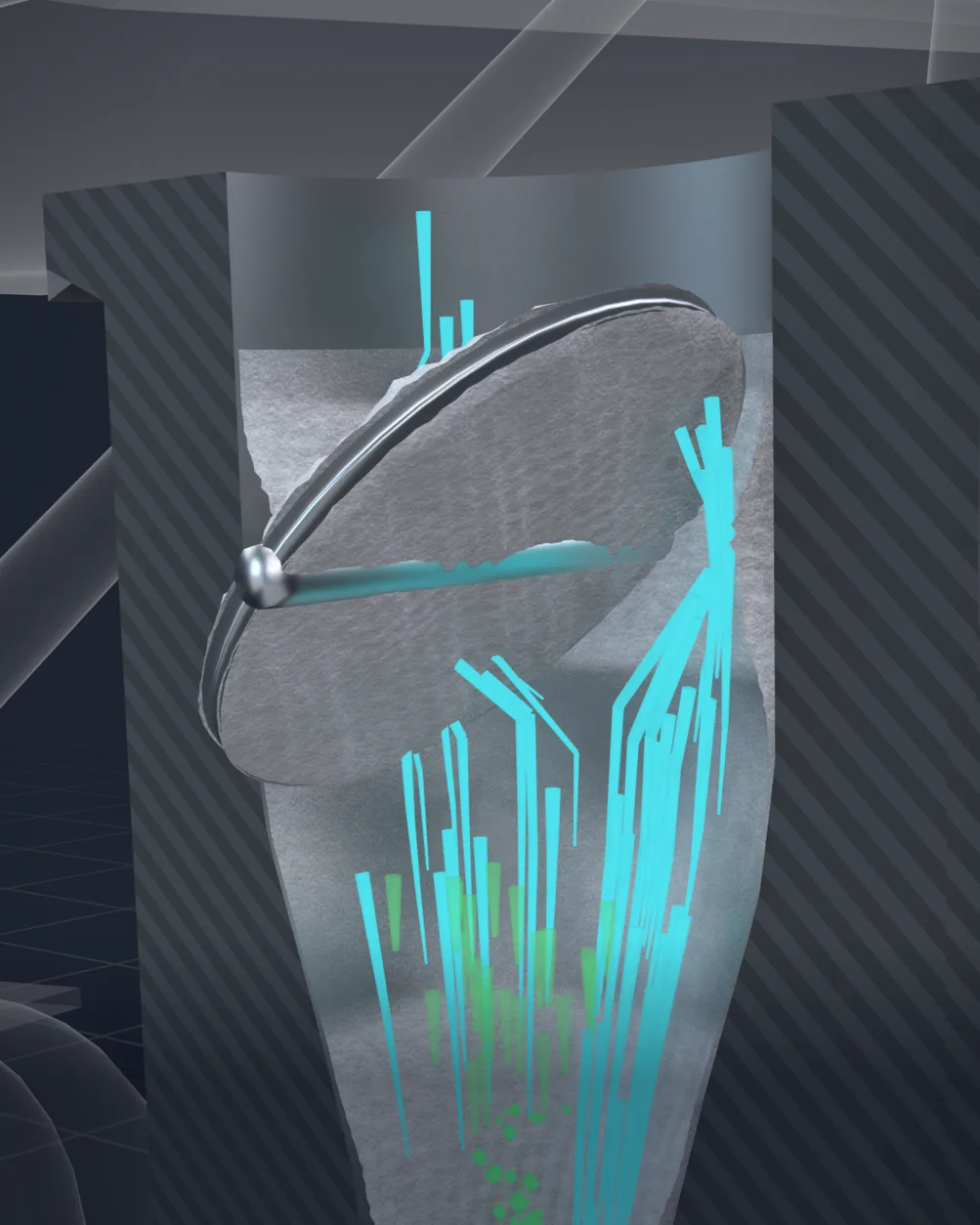
The carburetor under an older Cessna 172's engine meters fuel with nothing but air pressure, and the same pressure drop that makes it work can freeze it on a hot day, so knowing how it works tells you when to use the mixture knob and carb heat.
What the picture shows
The labels printed on the illustration, in reading order.
- Carburetor
The short version
An older Cessna 172, like the 172P, has a carburetor under its engine. Gravity feeds it fuel, and a difference in air pressure pushes that fuel into the airflow.
You manage it with three knobs: the throttle, the red mixture knob and carb heat, which clears ice that can form inside it even on a hot day.
How the carburetor meters fuel
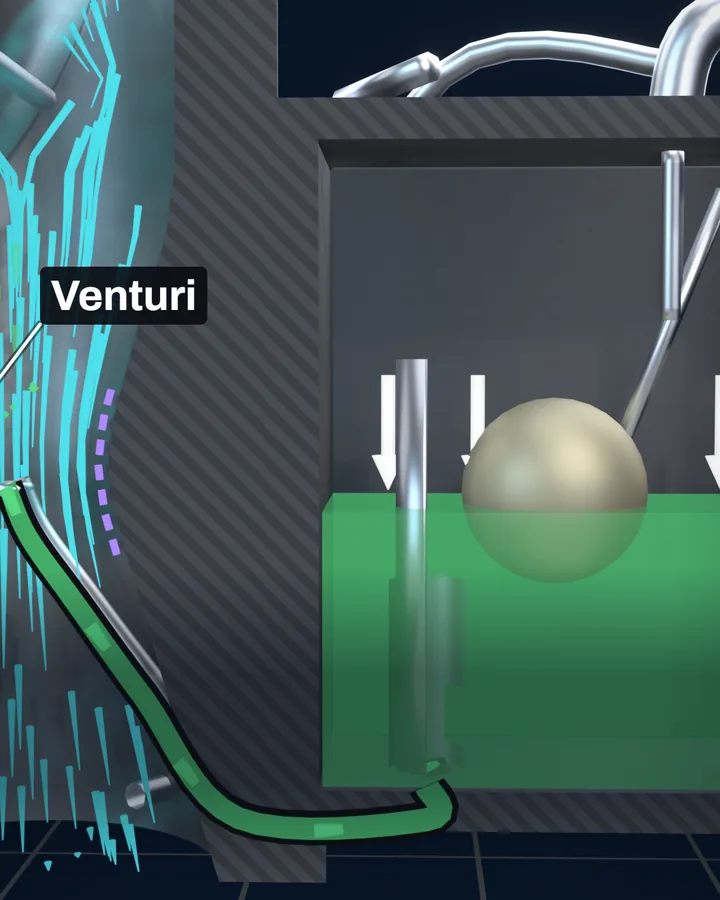
As the pistons draw air in, outside air comes through a filter and up into the bottom of the 172P's up-draft carburetor. On the way it squeezes through a narrow throat called the venturi. It speeds up to get through, and its pressure drops.
Beside the throat sits the float bowl, where a float holds the fuel at a steady level. The bowl is vented, so the air above its fuel stays at a higher pressure than the air in the throat. That difference pushes fuel up a passage and out of the discharge nozzle into the airstream, where it breaks up and evaporates.
Above the nozzle, the throttle knob turns a flat butterfly plate. Push the knob in and the plate turns toward edge-on. More air flows, the pressure drop grows, and more fuel comes with it.
Why you lean the mixture up high
The engine burns fuel by the weight of air it gets, but the venturi meters the volume of air. As you climb, each cubic foot of air weighs less, yet it still draws about the same fuel. The mixture turns rich, too much fuel for the air, and the engine can run rough.
Pulling the red mixture knob out turns a valve in the carburetor that cuts the fuel back, which leans the mixture. The 172P's handbook keeps it rich in the climb below 3,000 feet and leans for best RPM above that. In cruise it leans past peak RPM until the RPM drops 25 to 50. Pulled full out to idle cut-off, the knob stops the fuel to shut the engine down.
Coming down from altitude, push it back in. Too lean a mixture can run rough and overheat the engine.
Why it can ice on a hot day
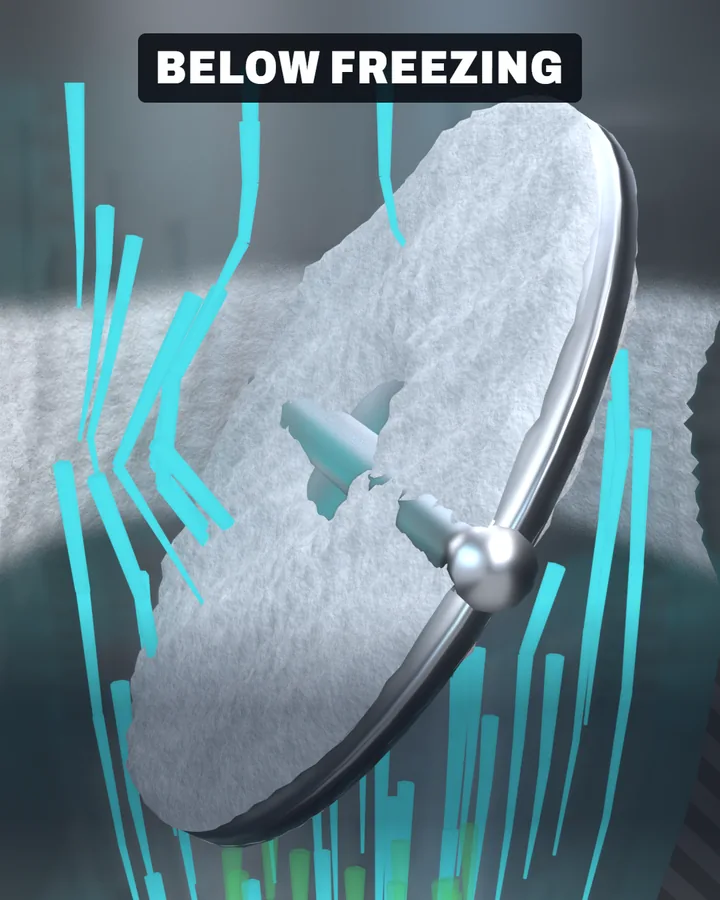
The venturi's pressure drop chills the air. The fuel evaporating into it cools it further, by up to about 70 °F. If the air is humid, its water vapor can freeze onto the throat and the throttle plate, even on a 100 °F day.
The risk is worst with the throttle nearly closed in a descent. The air gets past the plate only through a small gap at its edge, and a little ice can block it.
The 172P's propeller is fixed-pitch, so lost power shows as lower RPM. The first sign is a drop in RPM with the throttle where you left it, then roughness. Pull the carb heat knob all the way out. It swaps the filtered air for unfiltered air warmed by a shroud around an exhaust pipe. The 172P's emergency checklist adds full throttle, then turns the heat off once the engine runs smoothly.
Three mistakes with carb ice
Pushing the knob back in at the first dip. Warm air is less dense, so the RPM drops first, then rises slowly as the ice melts.
Waiting for a symptom before a descent. A throttled-back engine cools quickly, which makes icing more likely. When icing is possible, put full carb heat on before you close the throttle. The 172P's handbook does so before reducing power to land.
Waiting for freezing weather. It is most likely with outside air below about 70 °F and humidity above 80 percent. Other airplanes differ, so follow the handbook for yours.
Check yourself
1. What pushes the fuel into the venturi?
2. Why does the mixture get richer as you climb?
3. In cruise, the RPM slowly drops though you haven't touched the throttle. What do you do, and what will the RPM do next?
4. Why put carb heat on before you close the throttle for a descent?
Answers
1. The higher air pressure in the vented float bowl, against the lower pressure in the venturi's throat.
2. The venturi meters air by volume, so thinner air draws about the same fuel but brings less weight of air.
3. Pull full carb heat. The RPM dips first, because warm air is less dense, then rises as the ice melts.
4. A little ice can block the small gap at the nearly closed plate, and a throttled-back engine cools, inviting ice.
What this teaches
- In the 172P's up-draft carburetor, air speeds up through a narrow throat, the venturi, and its pressure drops; the float bowl beside it is vented, so its higher pressure pushes fuel up a passage and out of the discharge nozzle into the throat.
- The throttle is a butterfly plate above the nozzle: opening it lets more air through, and more fuel comes with it.
- As the airplane climbs the air gets thinner while the carburetor meters about the same fuel, so the mixture turns too rich; the 172P's handbook keeps it rich in the climb below 3,000 feet and leans above it; leaning with the red mixture knob cuts the fuel back to match, and full out (idle cut-off) stops the fuel to shut the engine down; in cruise the 172P's handbook leans until the RPM peaks, then further until it drops 25-50 RPM (POH p 4-16).
- The venturi's pressure drop and the fuel's evaporation can cool the air by up to about 70 °F, so ice can form in the throat and on the throttle plate on days as warm as 100 °F; a nearly closed throttle in a descent is the most sensitive; PHAK ch 7: carburetor ice 'is most likely to occur when temperatures are below 70 degrees Fahrenheit ... and the relative humidity is above 80 percent' (an outside air temperature, unlike the 70 °F of cooling).
- In a 172 with a fixed-pitch propeller the first sign is an unexplained drop in RPM; full carb heat brings warm air from a shroud around an exhaust pipe, the RPM dips at first because warm air is less dense, then rises as the ice melts, and the 172P's handbook clears it with full throttle and full heat; it calls for full heat as required in the descent and full heat before reducing power for landing, and PHAK ch 7 says: 'If carburetor icing conditions are suspected and closed-throttle operation anticipated, adjust the carburetor heat to the full ON position before closing the throttle'; with the throttle closed 'the engine cools rapidly' and 'is more susceptible to carburetor icing'.
Where to read more
Everything above rests on these. They are the FAA's own publications, free to read.
- Pilot's Handbook of Aeronautical Knowledge (FAA-H-8083-25), Chapter 7see Chapter 7
- FAA-H-8083-32, Chapter 2see Chapter 2
- Advisory Circular 00-6B, Aviation WeatherFAA advisory circular
- Cessna 172P POH carburetor, induction and engine controls
Keep reading
- ExplainerCarburettor ice on a warm day
- ExplainerHow magnetos work
- ExplainerHow gyro instruments work

Score the next flight before you go
FlightDecide reads the weather, the NOTAMs, your fuel and your weight and balance for the planned window, then scores them into a go / no-go call you can check against the raw data.
Get FlightDecide on the App StoreEducational content for pilots. It is advisory only and not a substitute for an official weather briefing, your POH, or your own judgment as pilot in command (14 CFR 91.3). The sources this explainer rests on are listed above.