Home › Explainers › The impossible turn after an engine failure
The short version
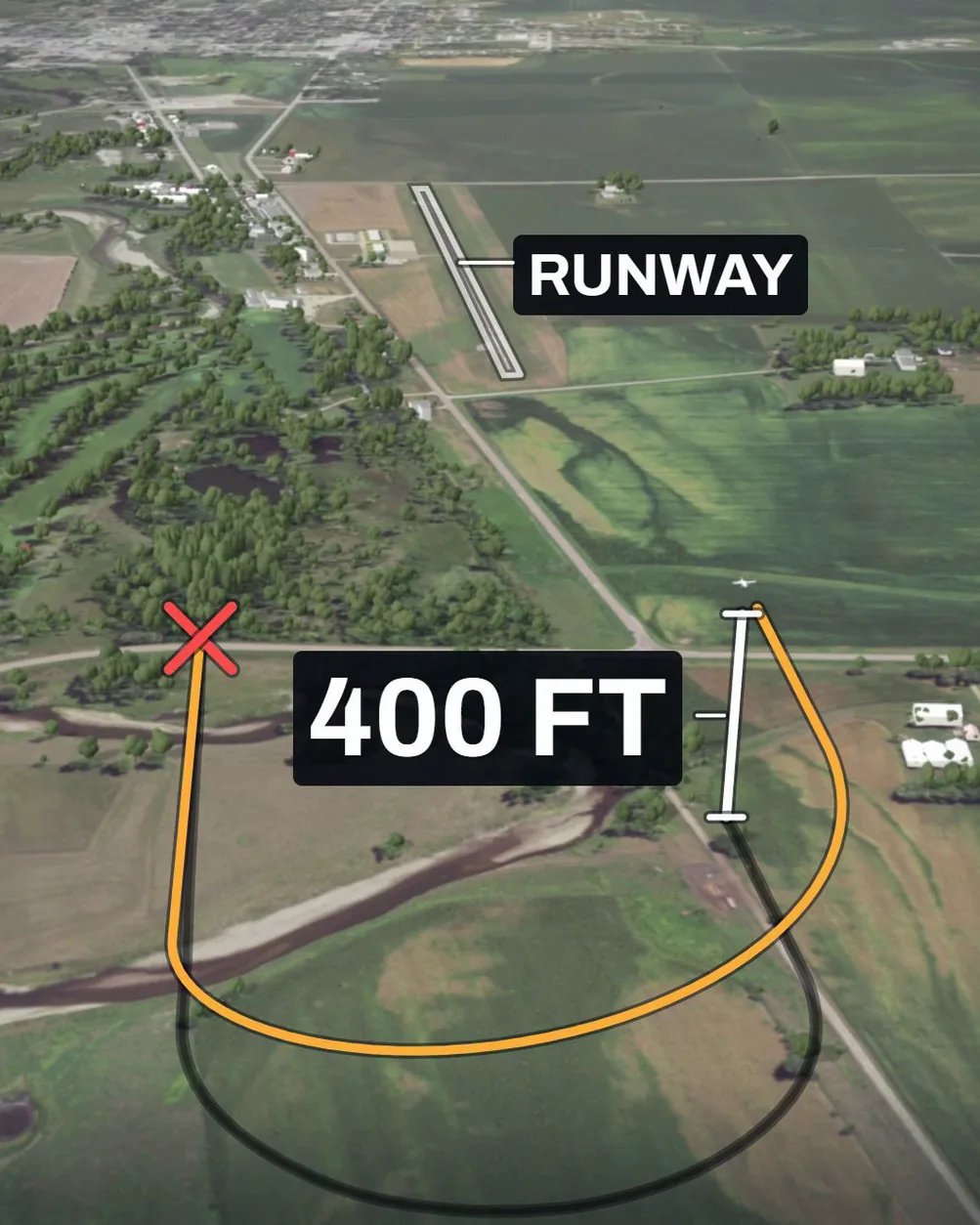
If the engine quits 400 feet above the ground just after takeoff, the runway behind you is the hardest place to reach. In this example, a gentle turn back needs about 225 degrees and more than twice your height, and a steep one can stall.
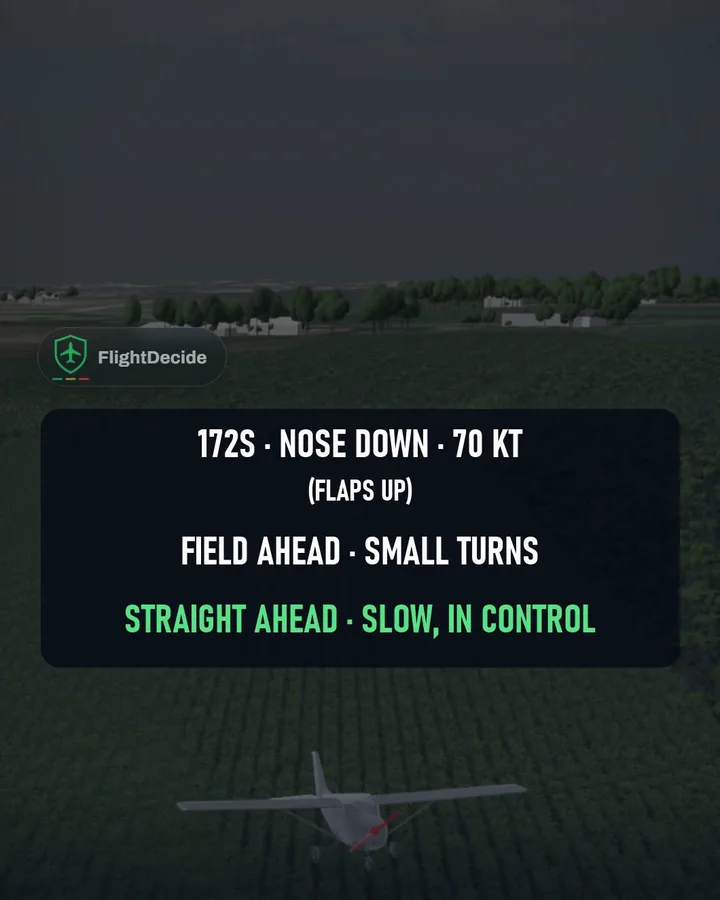
Lower the nose right away to hold the engine-failure speed, 70 knots in a 172S with the flaps up. Pick a field ahead, keep the turns small and land straight ahead, slow and under control.
Why turning back is more than 180 degrees
A turn has width. Even at a slow 65 knots, a standard-rate turn, 3 degrees a second, has a radius of about 2,100 feet.
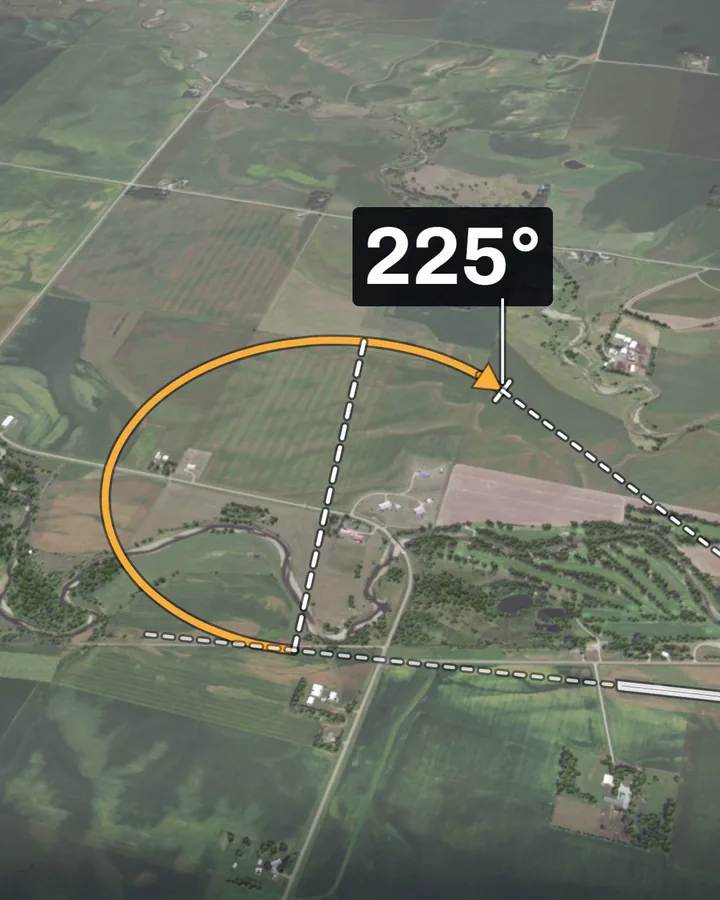
So a 180-degree turn leaves you about 4,200 feet to one side of the runway. In this no-wind example, you need about another 45 degrees just to point back at it, a total of about 225 degrees. Reaching the runway and lining up take more.
Why a gentle turn costs too much height
At the standard rate, 180 degrees takes a minute and 225 degrees takes 75 seconds. Add about 4 seconds to react, and you are gliding for 79 seconds.
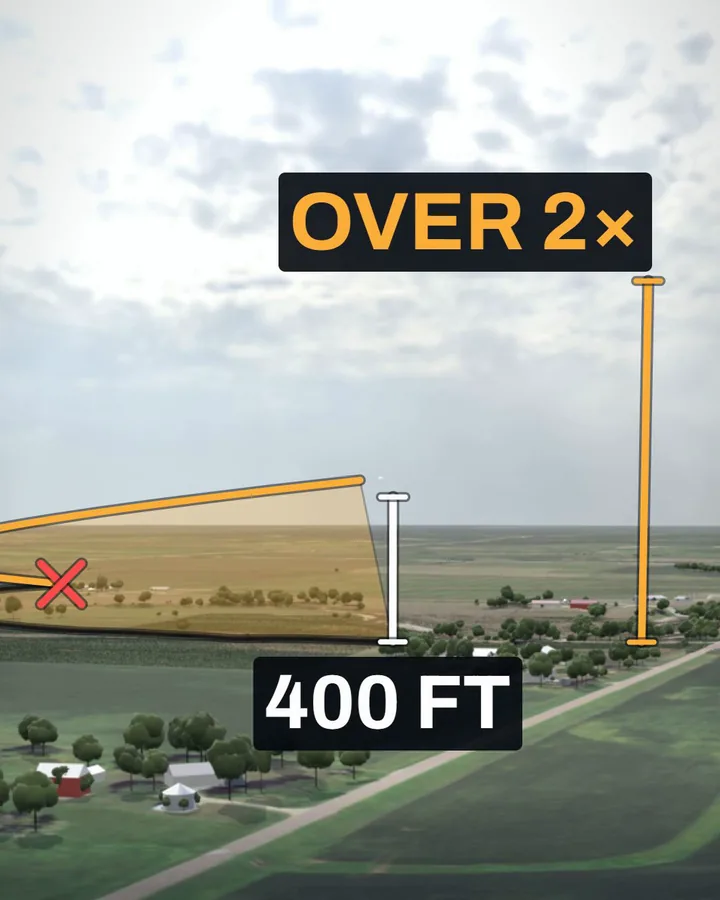
A 172S glides about 10 feet forward for every foot it comes down. At 70 knots that is about 700 feet a minute, so 79 seconds of gliding costs over 900 feet. That is more than twice the 400 feet you had.
That is a straight-glide figure. A banked glide sinks faster, and the glide to the runway after the turn needs more height still.
Why a steep turn back can stall
So a turn back has to be steep to be quick.
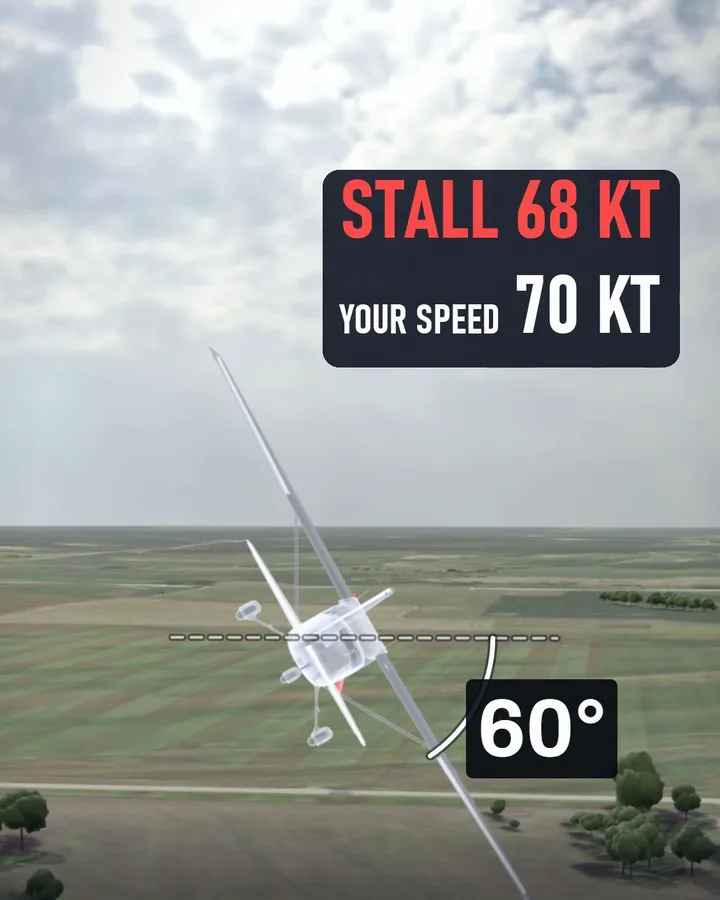
Banking tilts the wing's lift, so a turn needs more lift, and the stall speed rises, as the table shows for a 172S. Held level at 60 degrees of bank, the wing carries twice the airplane's weight, which raises the stall speed about 41 percent. That puts it at 68 knots, just 2 knots under the 70-knot engine-failure speed.
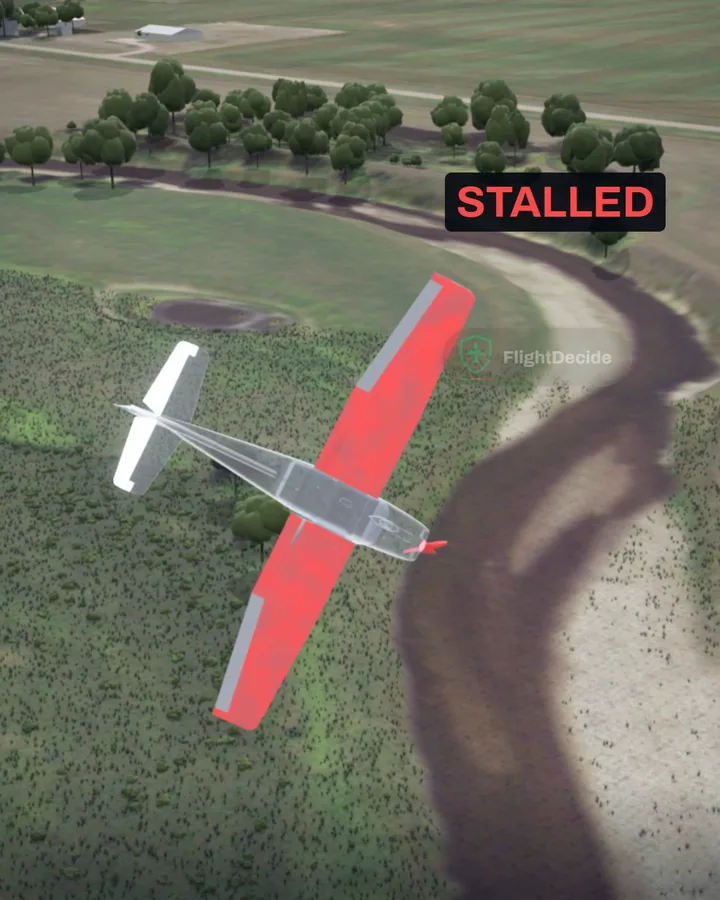
With your eyes on the runway, it is easy to pull back on the control wheel to tighten the turn and keep the nose up. That can bring an accelerated stall, when the wing meets the air at too great an angle under the turn's extra load. One wing may drop.
| Bank angle | Stall speed (knots indicated) |
|---|---|
| 0° | 48 |
| 30° | 52 |
| 45° | 57 |
| 60° | 68 |
What to fly instead
Lower the nose at once. Hold the engine-failure speed, 70 knots with the flaps up or 65 with them down, until the flare. That is the raise of the nose just before touchdown.
Plan the landing straight ahead, with only small changes in direction to miss obstacles.
If there is time while you keep flying, pull the mixture to idle cutoff, close the fuel shutoff valve and switch off the ignition. Set the flaps, then turn off the master switch, since the flaps need its power, and unlatch the door. Touch down under control at the slowest speed you can.
Three mistakes after an engine failure on takeoff
Lower the nose first, before anything else. It keeps the airspeed you need to glide and stay clear of the stall.
At the first stall warning in a turn, ease the back pressure until the warning stops, then roll toward wings level. Less load on the wing lowers the stall speed. A stall this close to the ground can drop a wing. With the nose swinging sideways, it can become a spin, with no height left to recover.
Brief your engine-failure plan before every takeoff, and leave the turn back to pilots who have practiced it. They have practiced it at a safe altitude with an instructor, in that make and model. Even they turn back only when certain of making the runway.
Check yourself
1. When the engine quits at 400 feet just after takeoff, what is your very first action?
2. Why doesn't a 180-degree turn leave you pointing at the runway?
3. Using the table, how far is 70 knots above the stall speed in a 60-degree bank?
4. Is it fine to make a small turn toward a good field just left of your nose?
Answers
1. Lower the nose to the engine-failure speed, 70 knots indicated with the flaps up.
2. The turn carries you off to one side, about 4,200 feet at 65 knots, so in this example pointing back takes about 225 degrees.
3. About 2 knots, which is almost no margin.
4. Yes. Small changes in direction to reach a field or miss obstacles are part of landing straight ahead.
Where to read more
Everything above rests on these sources.
- Airplane Flying Handbook (FAA-H-8083-3), Chapters 5 and 18Chapter 5 · Chapter 18
- Cessna 172S Pilot's Operating Handbookthe aircraft's own handbook
Keep reading
- ExplainerStall speed rising with bank angle
- ExplainerThe stall that turns into a spin
- Free toolFuel Burn & Endurance Calculator

Score the next flight before you go
FlightDecide reads the weather, the NOTAMs, your fuel and your weight and balance for the planned window, then scores them into a go / no-go call you can check against the raw data.
Get FlightDecide on the App StoreEducational content for pilots. It is advisory only and not a substitute for an official weather briefing, your POH, or your own judgment as pilot in command (14 CFR 91.3). The sources this explainer rests on are listed above.
Picture credits: 3D model: “Cessna172” by KOG_THORNS (sketchfab.com), CC BY 4.0, modified.