Home › Explainers › What are left-turning tendencies
The short version
Push the throttle in on a Cessna 172 and hold the controls still, and the nose swings left. Pilots call it torque, but it is really four effects of the turning propeller: the spiralling slipstream, P-factor, torque reaction and gyroscopic precession.
Together they pull hardest when the power is high and the speed is low. That is when you hold right rudder to keep the nose straight.
Gyroscopic precession matters most in a tailwheel airplane as the tail comes up on the takeoff roll. It hardly shows in a nosewheel trainer like the 172, so this page follows the other three.
The corkscrew slipstream hits the tail
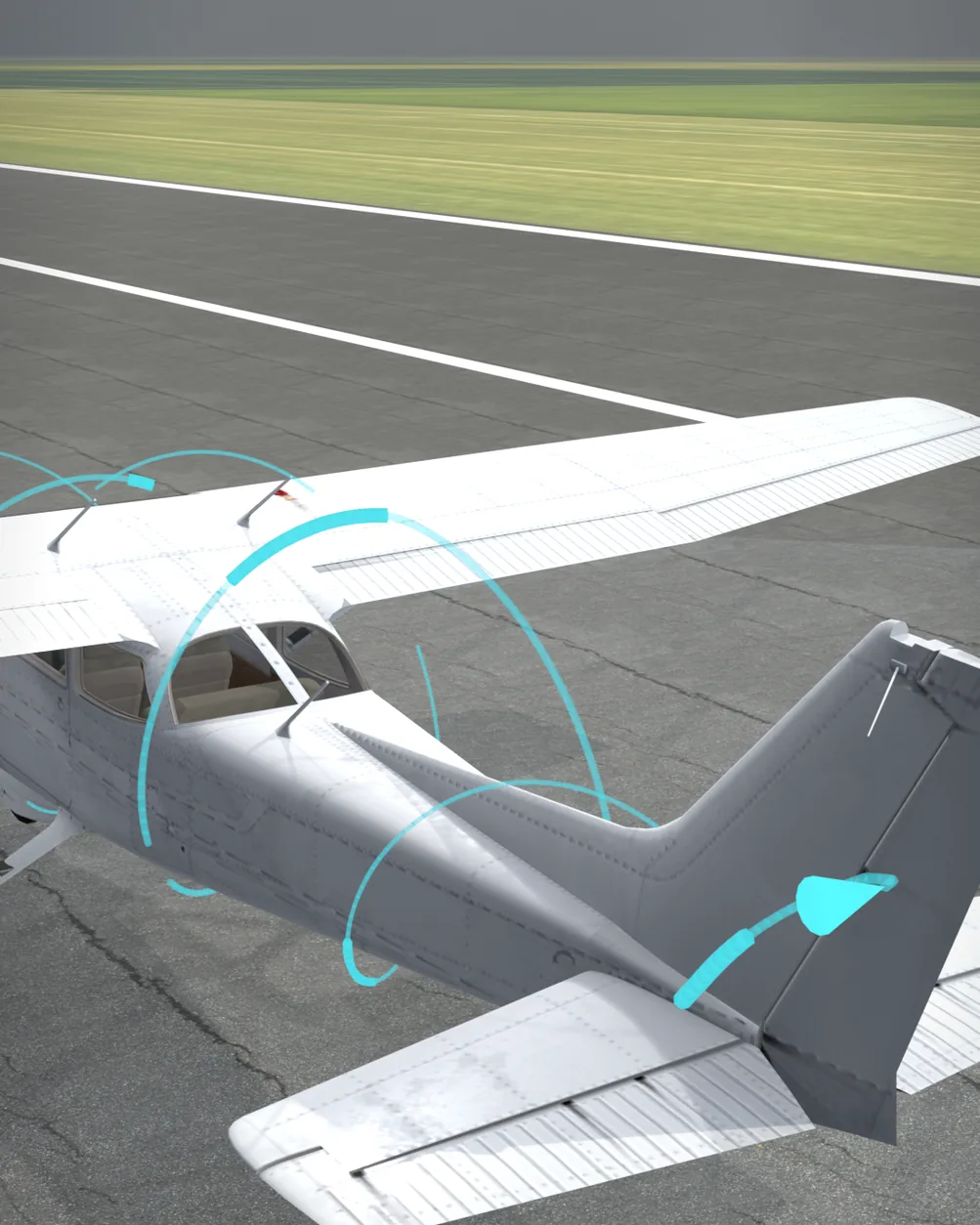
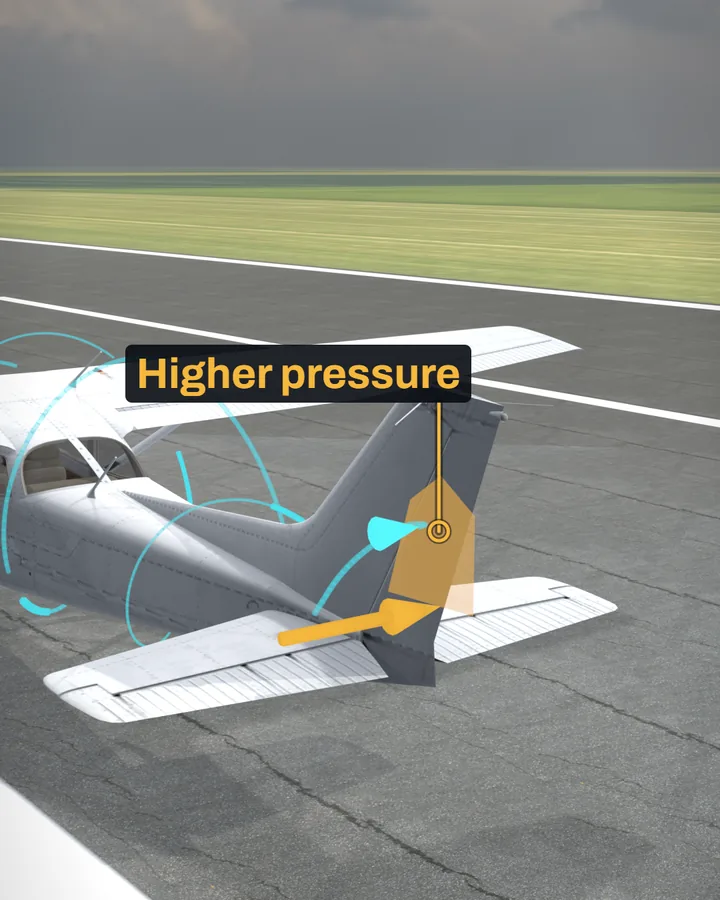
Seen from your seat, the propeller turns clockwise, as on most US-built airplanes. It throws its air back in a corkscrew that wraps around the fuselage and strikes the left side of the vertical fin.
That sideways push sends the tail right and the nose left.
The spiral is tightest, and pushes hardest, at high propeller speed and low forward speed, as on the takeoff roll. As the airplane speeds up, the spiral stretches out and pushes less.
P-factor shows up in the climb
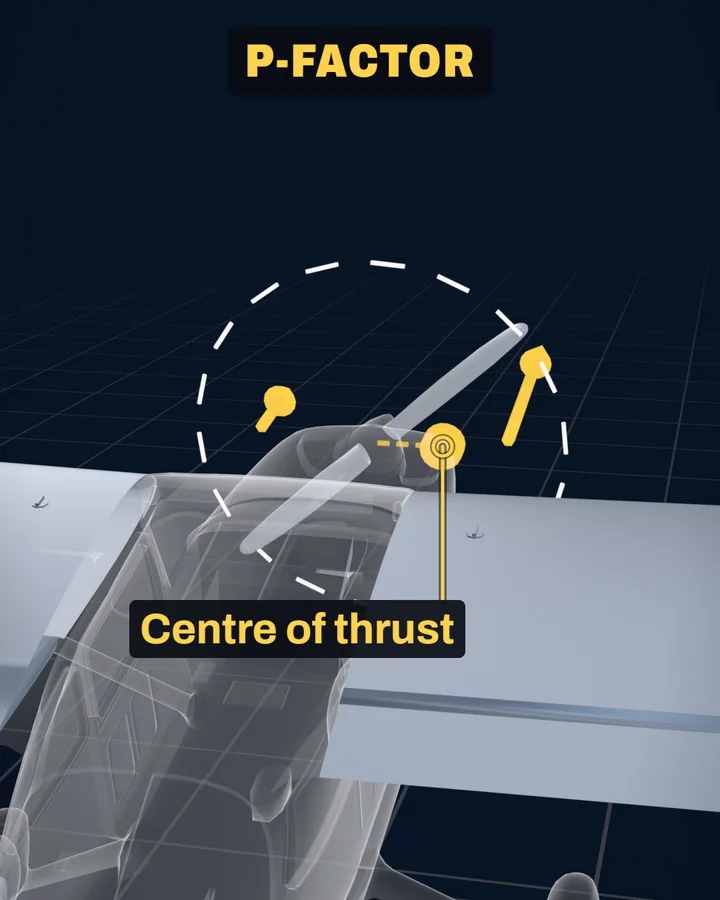
Raise the nose for the climb, and the propeller disc tilts up against the air.
The blade coming down on the right side, seen from the seat, now meets the air at a bigger angle. So it takes a bigger bite than the blade going up on the left, like paddling harder on the right side of a canoe.
That moves the centre of thrust to the right of the hub, and the nose yaws left. The imbalance shrinks as the nose comes down and is zero once the propeller shaft lines up exactly with the oncoming air.
Torque twists the airplane back
The engine twists the propeller one way, and the airplane gets the same twist back the other way.
At the 172S's rated 180 horsepower and 2,700 rpm, the twist is about 350 pound-feet. That is the same as a 175-pound person standing on the end of a two-foot bar.
In the air, it tries to roll the airplane left.
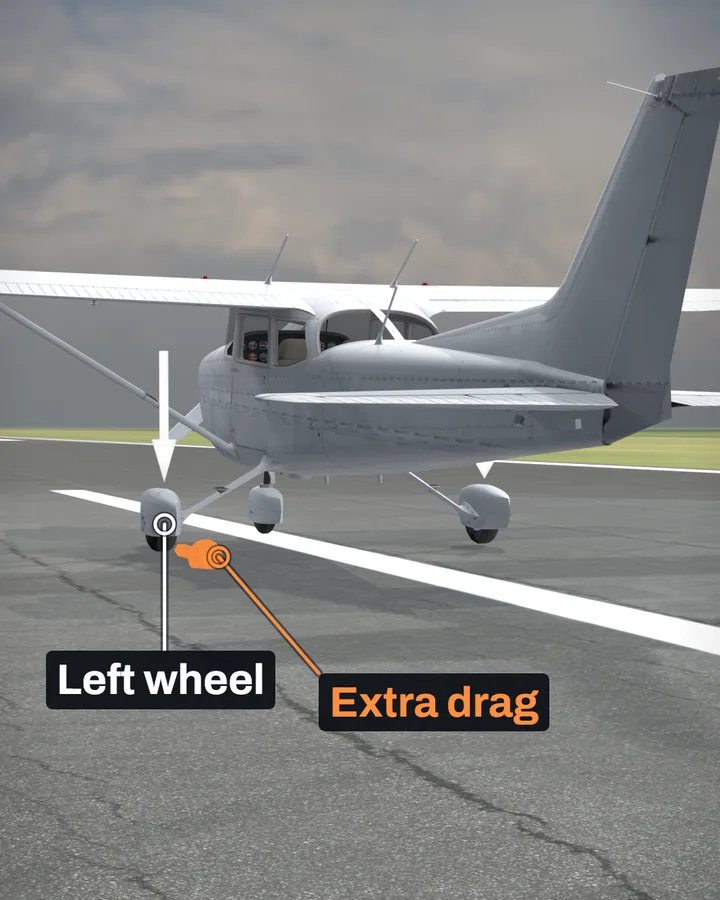
On the takeoff roll the wheels stop that roll, so the twist presses the left side down instead. The left main wheel carries more weight, its tyre makes more drag than the right one, and the nose turns further left.
The built-in correction and two mistakes
Designers build in a correction for this left pull, set for cruise, where an airplane spends most of its time. At high power and low speed it is not enough: the takeoff, the climb, slow flight and the go-around.
The first mistake is not expecting the swing as the airplane starts to accelerate. On the runway, keep the nose on the centreline with whatever rudder it takes.
The second is too little right rudder in the climb, which leaves the airplane in a sideslip. With the wings level and the nose yawing left, the ball in the slip/skid indicator slides right, so press right rudder until it is centred. The closer to the stall, the more rudder it takes, and a stall with the nose yawing is how a spin begins, here to the left.
In a power-off glide it is the other way round. The slipstream and P-factor fade but the correction stays, so a touch of left rudder may be needed to stay coordinated.
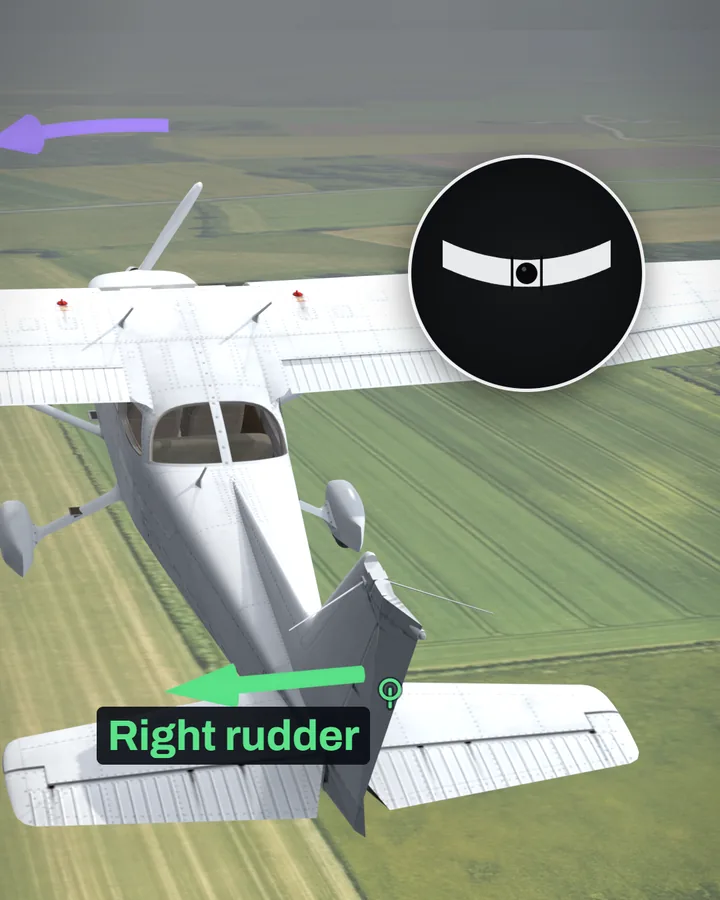
Check yourself
1. Climbing out with the wings level, the ball sits right of centre, so which rudder centres it?
2. Why does P-factor grow when you raise the nose for the climb?
3. On the takeoff roll the wheels stop the airplane from rolling, so how does torque reaction still turn the nose left?
4. In a power-off glide, which rudder may you need to stay coordinated?
Answers
1. Right rudder, pressed until the ball is back between the lines.
2. The down-going right blade meets the air at a bigger angle, so it takes a bigger bite and the thrust moves right.
3. It presses the left side down, so the left main wheel carries more weight and makes more drag than the right.
4. A touch of left rudder, because the built-in correction stays while the slipstream and P-factor fade.
Where to read more
Everything above rests on these sources.
- Pilot's Handbook of Aeronautical Knowledge (FAA-H-8083-25), Chapter 5
- Airplane Flying Handbook (FAA-H-8083-3), Chapters 3, 5 and 6Chapter 3 · Chapter 5 · Chapter 6
- Cessna 172S Pilot's Operating Handbookthe aircraft's own handbook
Keep reading
- ExplainerThe stall that turns into a spin
- ExplainerGoing around: power first
- ExplainerWhat is parasite drag?

Score the next flight before you go
FlightDecide reads the weather, the NOTAMs, your fuel and your weight and balance for the planned window, then scores them into a go / no-go call you can check against the raw data.
Get FlightDecide on the App StoreEducational content for pilots. It is advisory only and not a substitute for an official weather briefing, your POH, or your own judgment as pilot in command (14 CFR 91.3). The sources this explainer rests on are listed above.
Picture credits: 3D model: “Cessna172” by KOG_THORNS (sketchfab.com), CC BY 4.0, modified. Sky: Kloofendal 38d Partly Cloudy (Pure Sky) by Greg Zaal, and the grass and asphalt textures (polyhaven.com), CC0.