Home › Explainers › The emergency descent for an engine fire in a 172
The short version
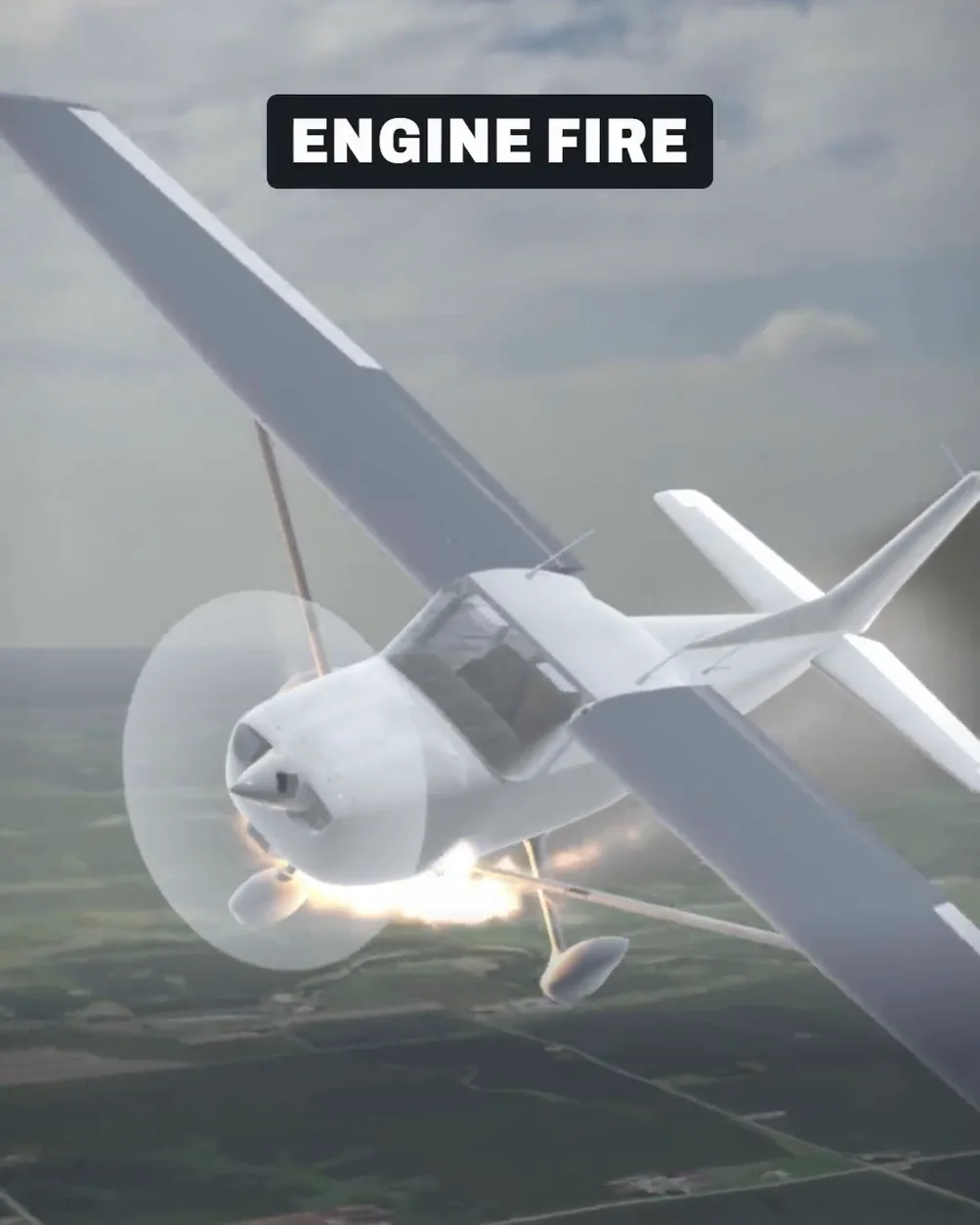
In a 172S with an engine fire in flight, cut the fuel first. Make a quick Mayday only if there's time, then switch the master off and close the cabin heat and air, except the overhead vents.
Get down fast. Fly an emergency descent at 100 knots, banked 30 to 45 degrees, then land flaps up at 70 knots and get out.
Fuel first
Most engine fires start when fuel or oil leaks onto something hot, such as the exhaust. By the time you see one, it is usually well developed.
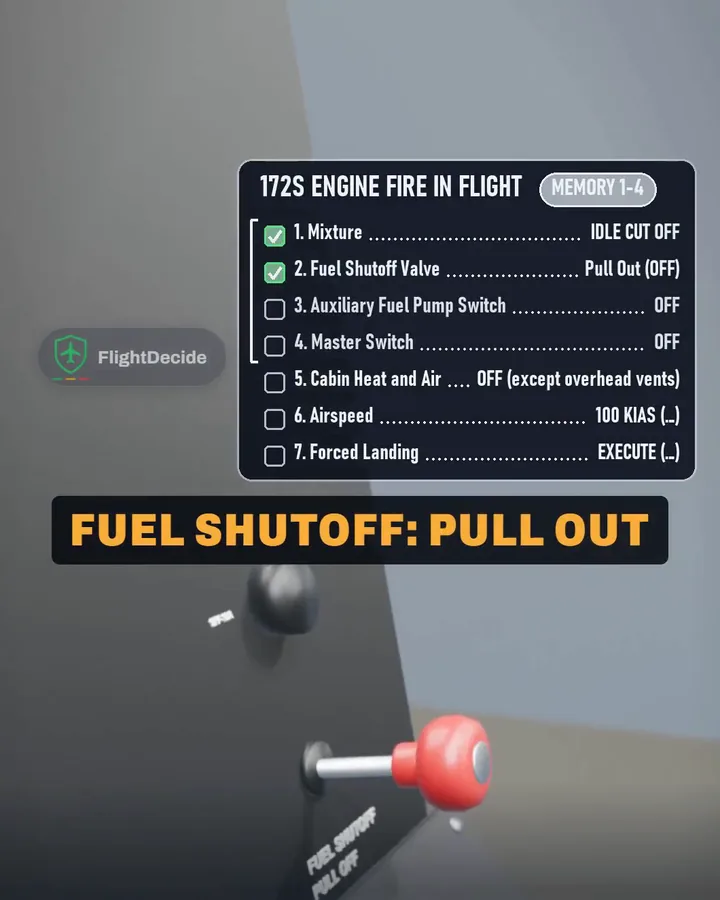
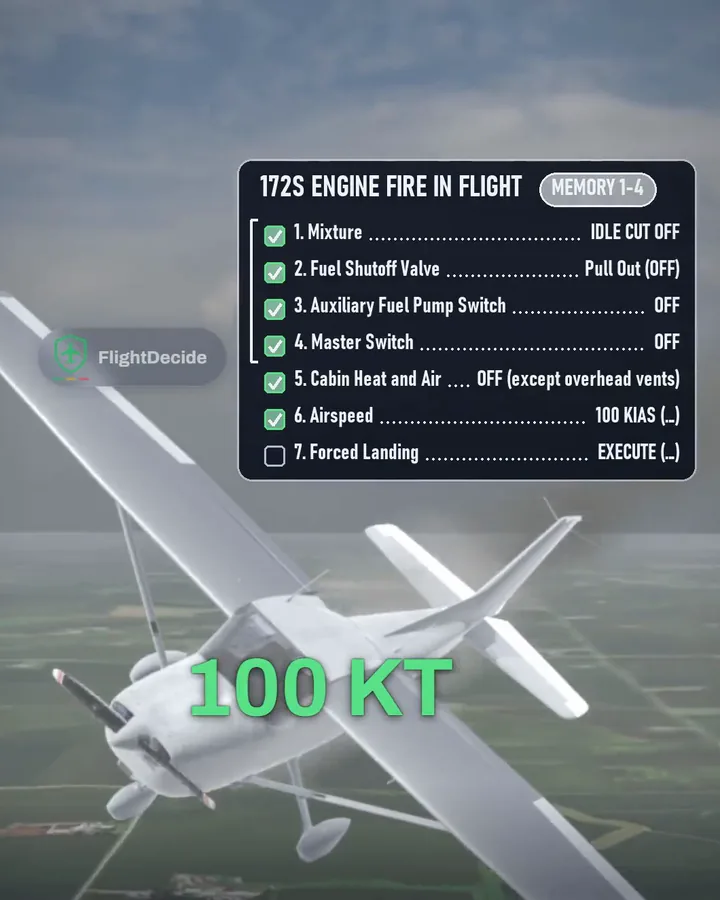
The first four checklist items are memory items. Idle cutoff, the mixture pulled fully out, stops fuel to the cylinders. The red fuel shutoff knob, pulled out, closes the supply line, and the auxiliary fuel pump goes off. That can starve a fuel-fed fire, though not an oil-fed one.
The fourth item is the master switch, the main electrical switch. If there's time, make a quick Mayday just before it goes off. Skip the call if the fire is electrical or a crash landing is close. Master off takes the radio, the transponder and the electric flaps.
Once the fire is out, don't restart the engine. A restart would pump fuel back to the leak, and a fire that seems out can flare up again.
| Step | Item | Setting |
|---|---|---|
| 1 | Mixture | Idle cutoff |
| 2 | Fuel shutoff valve | Pulled out, off |
| 3 | Auxiliary fuel pump switch | Off |
| 4 | Master switch | Off |
| 5 | Cabin heat and air | Off, except the overhead vents |
| 6 | Airspeed | 100 knots indicated, higher within limits if the fire still burns |
| 7 | Forced landing | Then the checklist for a landing without engine power |
Why you bank on the way down
An emergency descent gets you down as fast as possible, here to land. The 172S fire checklist has no descent steps, so you fly the emergency descent pilots train.
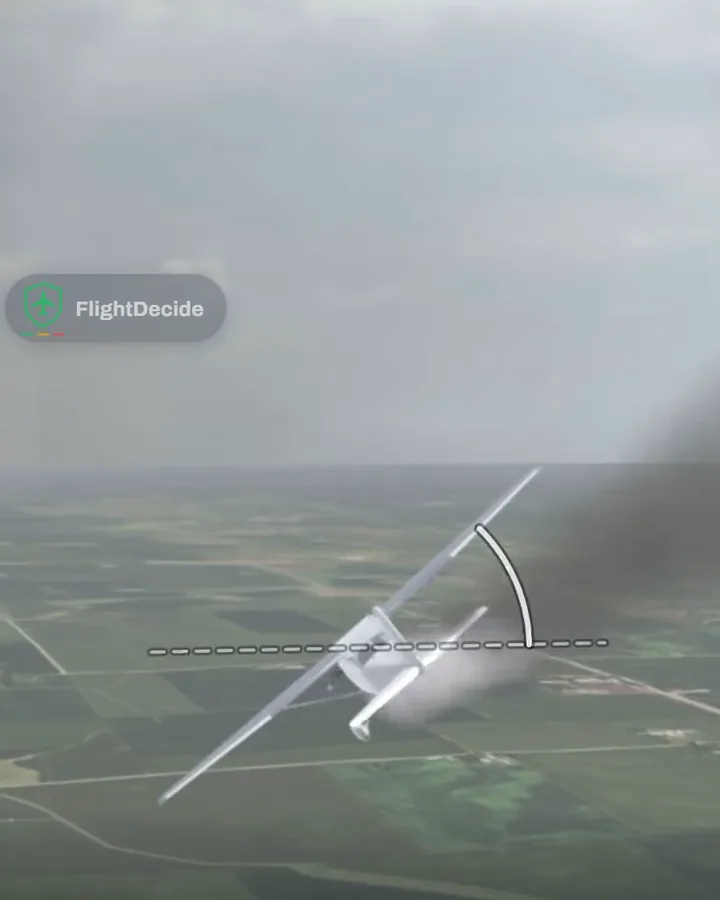
Roll into a bank of about 30 to 45 degrees and let the nose drop into the turn. The tilted lift curves your path down while the wings stay loaded, with no sharp push forward. Use smooth elevator to hold the speed. The turn also lets you look below for traffic and a field.
Hold 100 knots, the checklist's speed, not the 68-knot best glide speed, the speed that glides farthest. You want down fast, not far. The extra speed adds drag. If the fire still burns, try a higher speed, within the limits, to put it out. Its heat may weaken the structure, so fly gently and never pass the red line, the never-exceed speed. In turbulence, stay below maneuvering speed, above which full or abrupt control movements can overstress the airplane. In a 172S it is 105 knots at 2,550 pounds, 98 at 2,200 and 90 at 1,900.
Landing with the master off
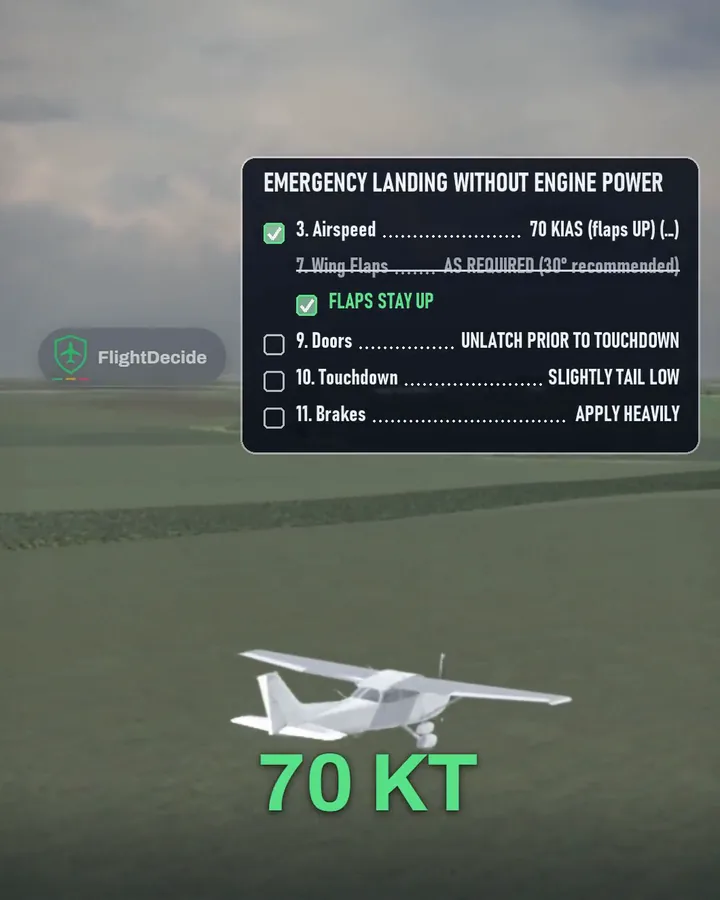
Master off leaves the electric flaps where they are, up for this descent, so the landing is flown flaps up at 70 knots.
Roll out high near the field, slow from 100 to 70 knots and lose any extra height with a forward slip. That is a bank with opposite rudder, which steepens the glide. Hold 70 knots with the elevator until the flare. Tighten the seat belts and unlatch the doors before touchdown. Touch down main wheels first, nose slightly high, brake hard and get out.
Four mistakes to avoid
Hold 100 knots in the descent, not best glide. On the private pilot knowledge test, emergency descent airspeed questions were missed 73 percent of the time in the year to June 2025.
Bank into the descent instead of shoving the nose straight down. An abrupt push unloads the airplane toward zero G, where loose items float.
Use the electrical fire checklist for smoke from burning wiring, since it has its own steps. It can still call for a fast descent, with the engine running.
Practice it with an instructor, after briefing a recovery altitude and clearing the area. In training, the power goes to idle first, and you touch each fuel control without moving it.
Check yourself
1. What is the very first thing you do when your 172S's engine catches fire in flight?
2. Why do you bank 30 to 45 degrees instead of pushing the nose straight down?
3. Which three things that matter here do you lose when the master switch goes off?
4. What speed do you fly in the emergency descent, and what speed on final with the flaps up?
Answers
1. Cut the fuel, with the mixture to idle cutoff and the fuel shutoff valve pulled out to off.
2. A smooth banked entry keeps the wings loaded with no abrupt push, so loose items stay put.
3. The radio, the transponder and the electric flaps.
4. 100 knots in the descent, and 70 knots on final with the flaps up.
Where to read more
Everything above rests on these sources.
- Airplane Flying Handbook (FAA-H-8083-3), Chapters 9 and 18Chapter 9 · Chapter 18
- Pilot's Handbook of Aeronautical Knowledge (FAA-H-8083-25), Chapter 5
- Cessna 172S Pilot's Operating Handbookthe aircraft's own handbook
- Aeronautical Information Manual, paragraph 6-3-1
- Private Pilot Airman Certification Standards (FAA-S-ACS-6C)
- FAA Frequently Missed Knowledge Test ACS Codes (2nd quarter 2025)
Keep reading
- ExplainerThe impossible turn after an engine failure
- ExplainerStall speed rising with bank angle
- ExplainerHow magnetos work

Score the next flight before you go
FlightDecide reads the weather, the NOTAMs, your fuel and your weight and balance for the planned window, then scores them into a go / no-go call you can check against the raw data.
Get FlightDecide on the App StoreEducational content for pilots. It is advisory only and not a substitute for an official weather briefing, your POH, or your own judgment as pilot in command (14 CFR 91.3). The sources this explainer rests on are listed above.
Picture credits: 3D model: “Cessna172” by KOG_THORNS (sketchfab.com), CC BY 4.0, modified.