Home › Explainers › How a turboprop works, compared with your 172's engine
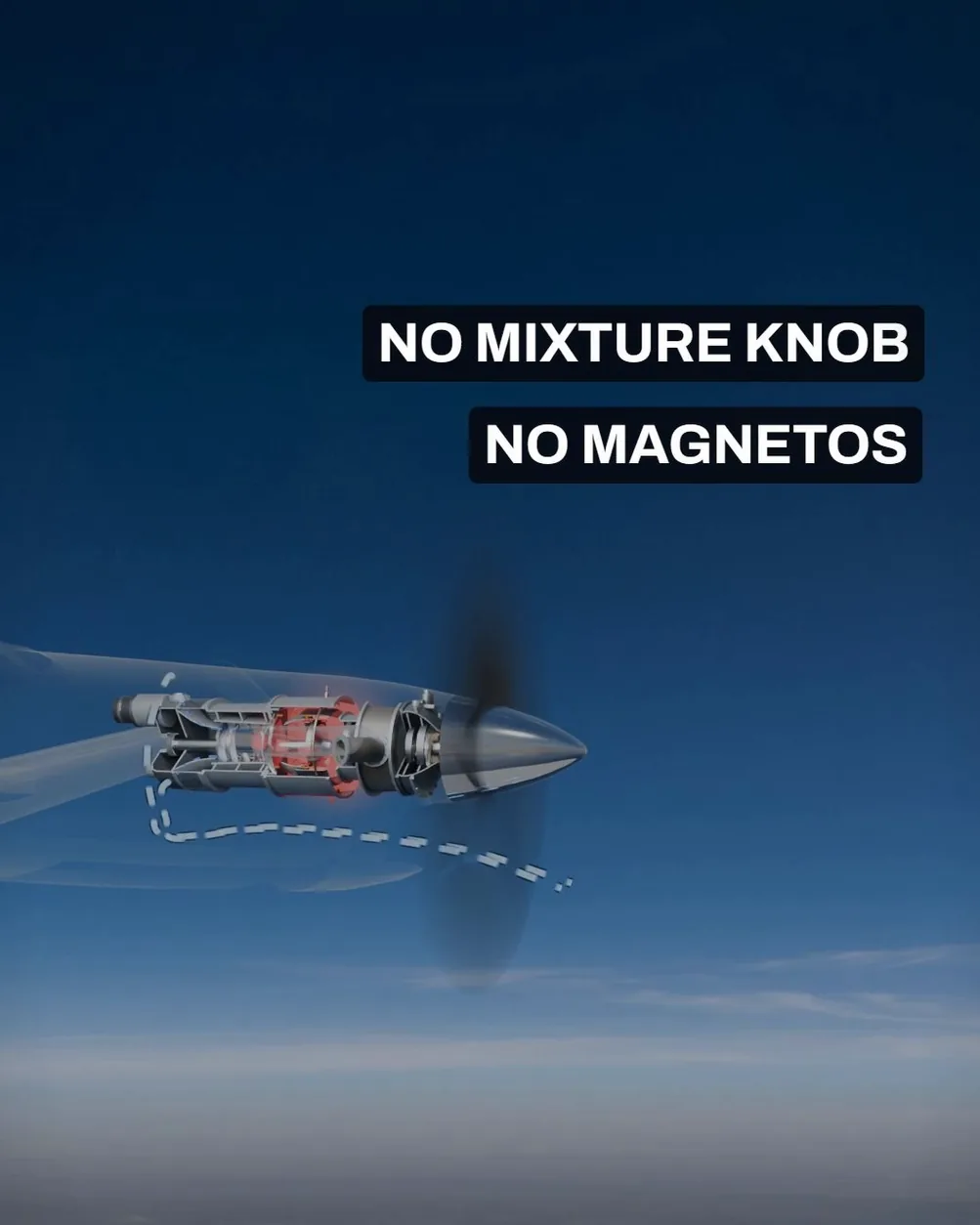
The short version
A turboprop is a turbine engine that turns a propeller through a gearbox. A turbine is a wheel of blades that hot gas spins.
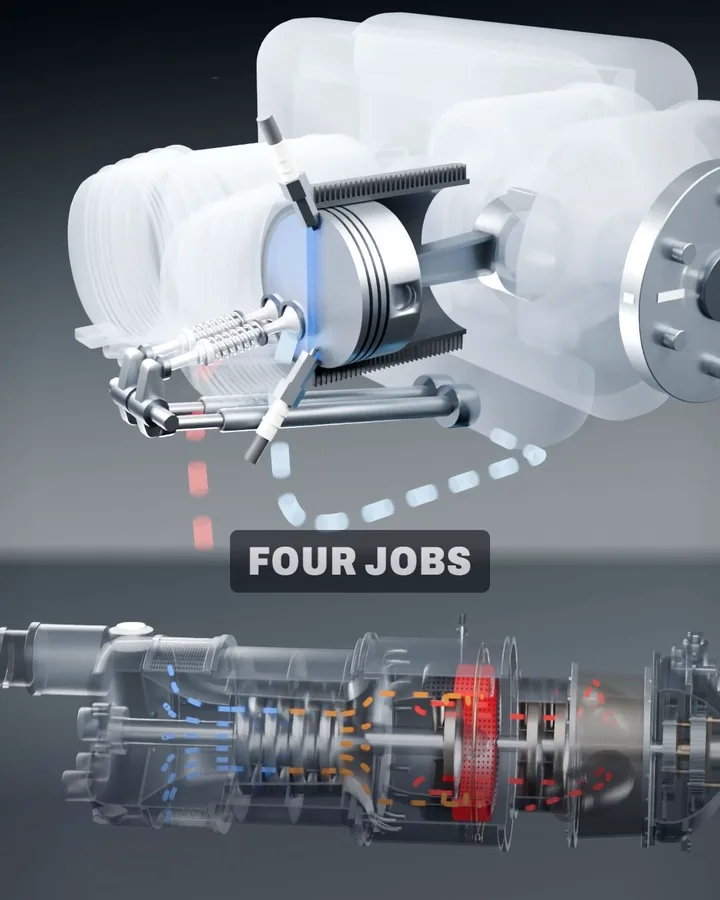
Your 172's engine does the same four jobs as a turboprop: take air in, squeeze it, burn it with fuel and push it out. The 172 does them in turns, inside each cylinder. A turboprop does all four at once, each in its own section.
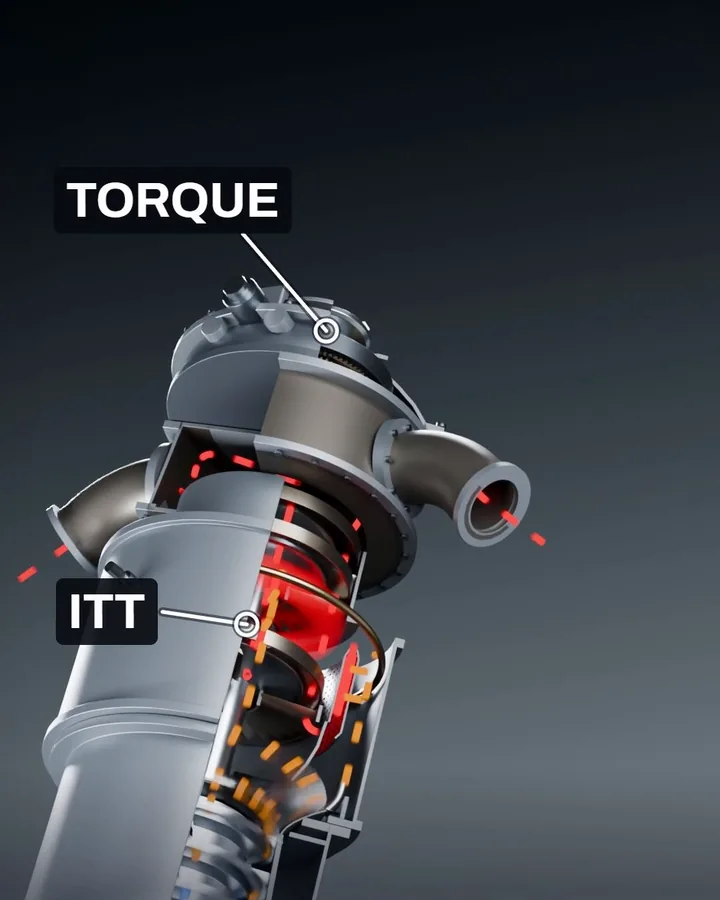
In a TBM 930, a single-engine turboprop, your power gauge shows torque, the twist on the propeller shaft. You also watch the temperature between its turbines.
Four jobs, in turns or at once
In each of the 172P's four cylinders, the intake valve opens and the piston moves in toward the crankshaft, drawing in fuel and air. With the valve shut, it moves back out and squeezes them. A spark lights the mixture, and the burn shoves the piston in. Then the exhaust valve opens, and the piston pushes the burned gas out.
Each cylinder fires once every two crankshaft turns, so the four fire twice a turn. At a 2,400 rpm cruise, that's about 80 fires a second.
| Job | Your 172, in each cylinder in turn | The PT6, all at once |
|---|---|---|
| Take air in | Intake stroke | The inlet at the engine's rear |
| Squeeze it | Compression stroke | The compressor |
| Burn it with fuel | Power stroke | The combustion chamber, whose hot gas spins the turbines |
| Push it out | Exhaust stroke | Two exhaust stubs near the front |
A walk through the PT6
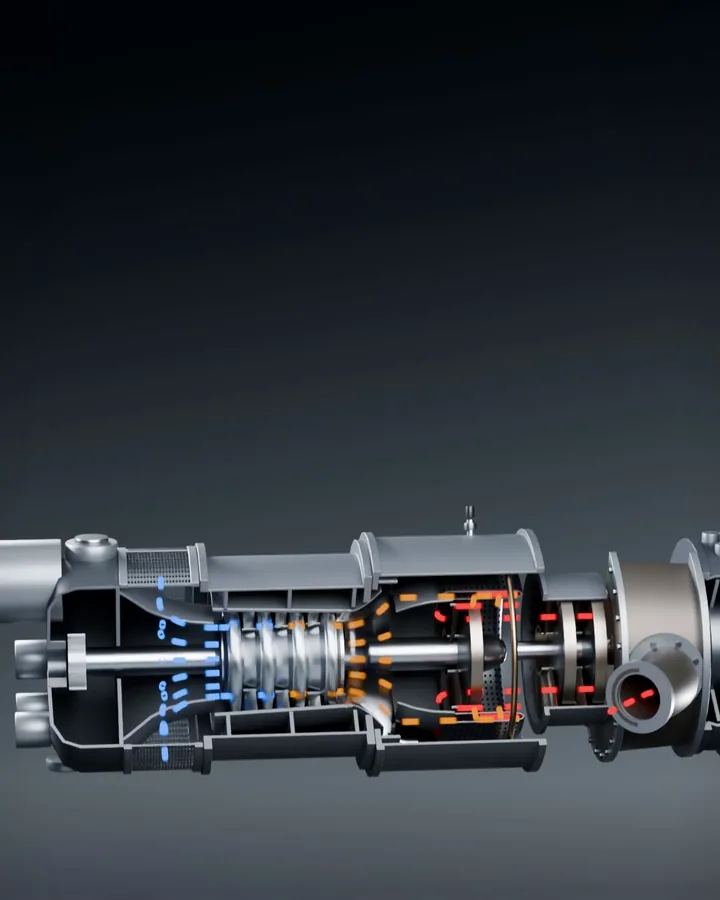
The TBM 930 flies with a Pratt & Whitney Canada PT6A-66D. It is a reverse-flow engine: air goes in at the back and leaves near the front.
Air enters the cowling low at the front, and a duct carries it back to a screen at the engine's rear. Heading forward, four rows of spinning compressor blades squeeze it, then a spinning wheel flings it outward.
The squeezed air turns into the ring-shaped combustion chamber. There it reverses and mixes with fuel from the nozzles. Two igniter plugs light it at the start, then it keeps burning as fuel and air flow in.
The hot gas reverses again to spin the compressor turbine, which drives the compressor. Then it flows forward through two power turbine wheels on their own shaft, which turn the propeller through the gearbox.
This folded path keeps the engine short and light. Only the hot gas links the two turbine shafts, a design called a free turbine. The starter spins only the compressor side, whose speed, Ng, shows in percent.
A gearbox where your 172 has none
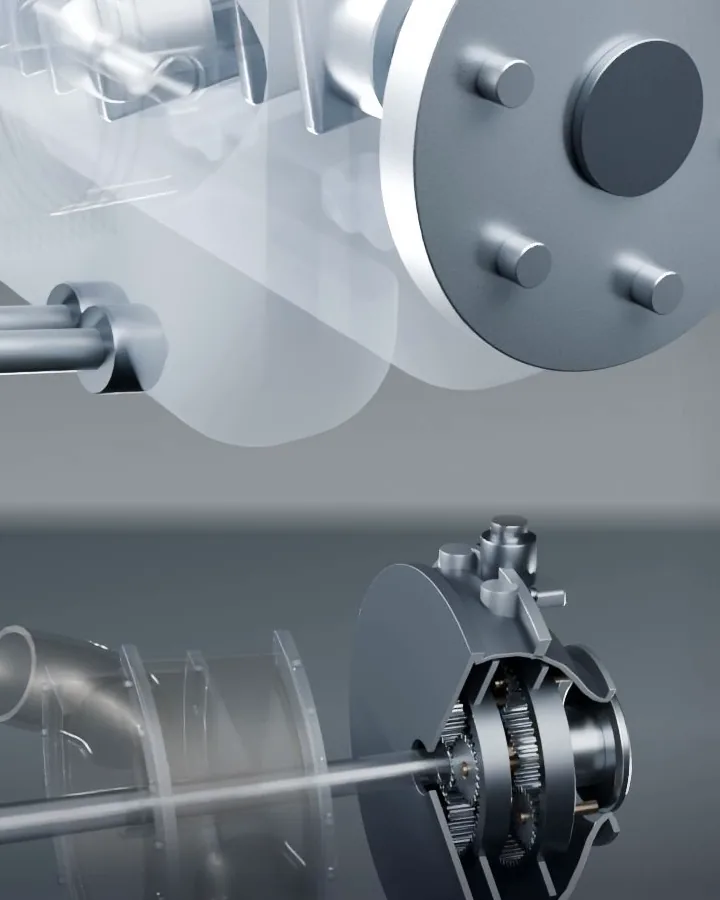
A propeller works best much slower than a turbine turns. So a gearbox at the PT6's front steps the speed down in two stages. In the TBM, the propeller turns at 2,000 rpm, and the engine is rated at 850 horsepower at the propeller shaft.
The 172P's 160-horsepower engine bolts a fixed-pitch propeller, whose blade angle never changes, straight to the crankshaft. So the tachometer, which shows engine rpm, is your power gauge.
What changes in the cockpit
The TBM 930 has no mixture control: a fuel control unit measures out the fuel, so there is nothing to lean. It has no magnetos, since once lit the flame needs no spark.
The throttle sets the power. Lift its knob and it moves to a second range, CUT OFF and two idles, for starting and stopping. There the propeller stays feathered, its blades nearly edge-on to the air.
The propeller has no lever. A governor, an automatic speed control, holds its 2,000 rpm by changing the blade angle. So the torque gauge, read in percent, is the power gauge.
You also watch ITT, the interturbine temperature, read between the turbines. The vanes just ahead of the first turbine meet the hottest gas touching metal in the engine, and too much heat damages them. So temperature usually limits a turbine engine.
Mistakes a 172 pilot brings along
Set power by torque, within its limits, never by the tachometer or the throttle's stop. Keep torque at or below the flight manual's table value for your altitude and temperature, and never above 100 percent. Ng must never pass 104 percent, and ITT has its own limit. Near sea level, this engine can make more than 100 percent torque.
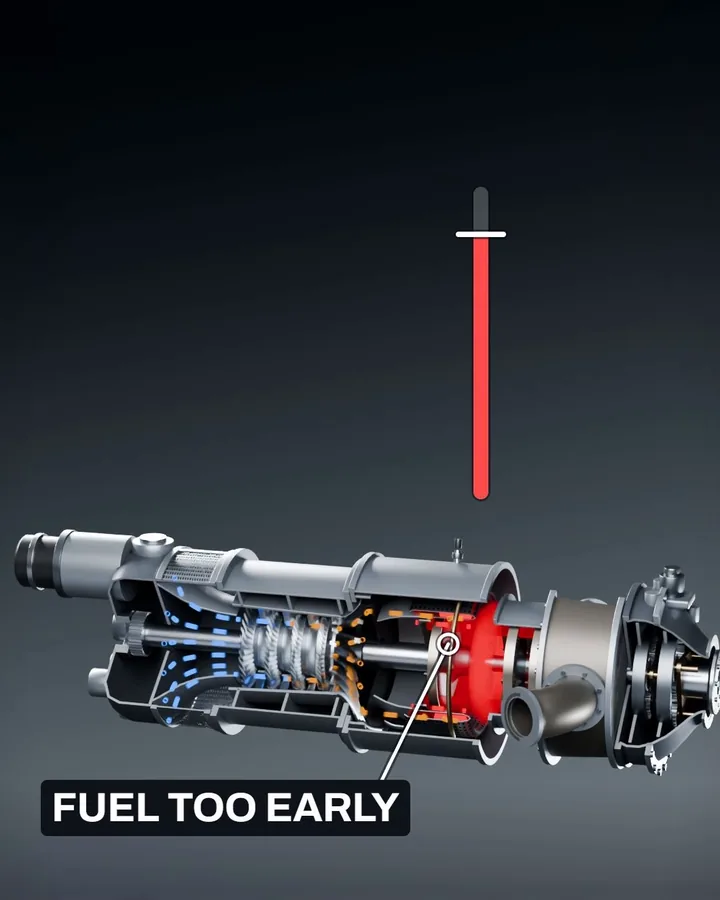
Wait for Ng, not propeller rpm, to reach the flight manual's minimum before you bring in fuel. Fuel too early, or too much, can cause a hot start, when the temperature passes its limit. Only part of the compressor's air burns, and the rest cools the gas. A slow compressor moves too little air for that, so ITT can pass its limit.
Watch ITT through the whole start. If it passes its start limit, abort as the flight manual sets out. In the TBM, the throttle goes to CUT OFF first.
After any hot start, note the peak ITT and how many seconds it lasted, since the start limits pair the two. The flight or maintenance manual says what to inspect.
Check yourself
1. Why does fuel brought in before Ng is high enough risk a hot start?
2. What joins the compressor turbine to the power turbines in a PT6?
3. Why does a turboprop need a gearbox?
4. What do you set a TBM 930's power by, and within which limits?
Answers
1. The slow compressor moves too little air to cool the burning gas, so ITT can pass its limit.
2. Only the hot gas. The two turbine shafts are not joined.
3. A propeller works best much slower than a turbine turns.
4. Torque, at or below the table value and never above 100 percent, with Ng never above 104 percent and ITT within its limit.
Where to read more
Everything above rests on these sources.
- Pilot's Handbook of Aeronautical Knowledge (FAA-H-8083-25), Chapter 7
- Aviation Maintenance Technician Handbook, Powerplant (FAA-H-8083-32), Chapter 1
- Daher TBM 930 Pilot's Information Manual (DMJPIPYEE0)
- EASA TCDS IM.E.008, PT6A-67 series (PT6A-66D)
- Cessna 172P Pilot's Operating Handbook (1981)the aircraft's own handbook
- Cessna 208 Caravan Pilot's Operating Handbook (1998)the aircraft's own handbook
Keep reading
- ExplainerInside the 172 engine and what low oil pressure means
- ExplainerHow magnetos work
- ExplainerHow a constant-speed propeller holds its RPM

Score the next flight before you go
FlightDecide reads the weather, the NOTAMs, your fuel and your weight and balance for the planned window, then scores them into a go / no-go call you can check against the raw data.
Get FlightDecide on the App StoreEducational content for pilots. It is advisory only and not a substitute for an official weather briefing, your POH, or your own judgment as pilot in command (14 CFR 91.3). The sources this explainer rests on are listed above.
Picture credits: 3D model: “Daher TBM 930” by helijah (sketchfab.com), CC BY 4.0, modified.