Home › Explainers › How full fuel tanks can still starve the engine
The short version
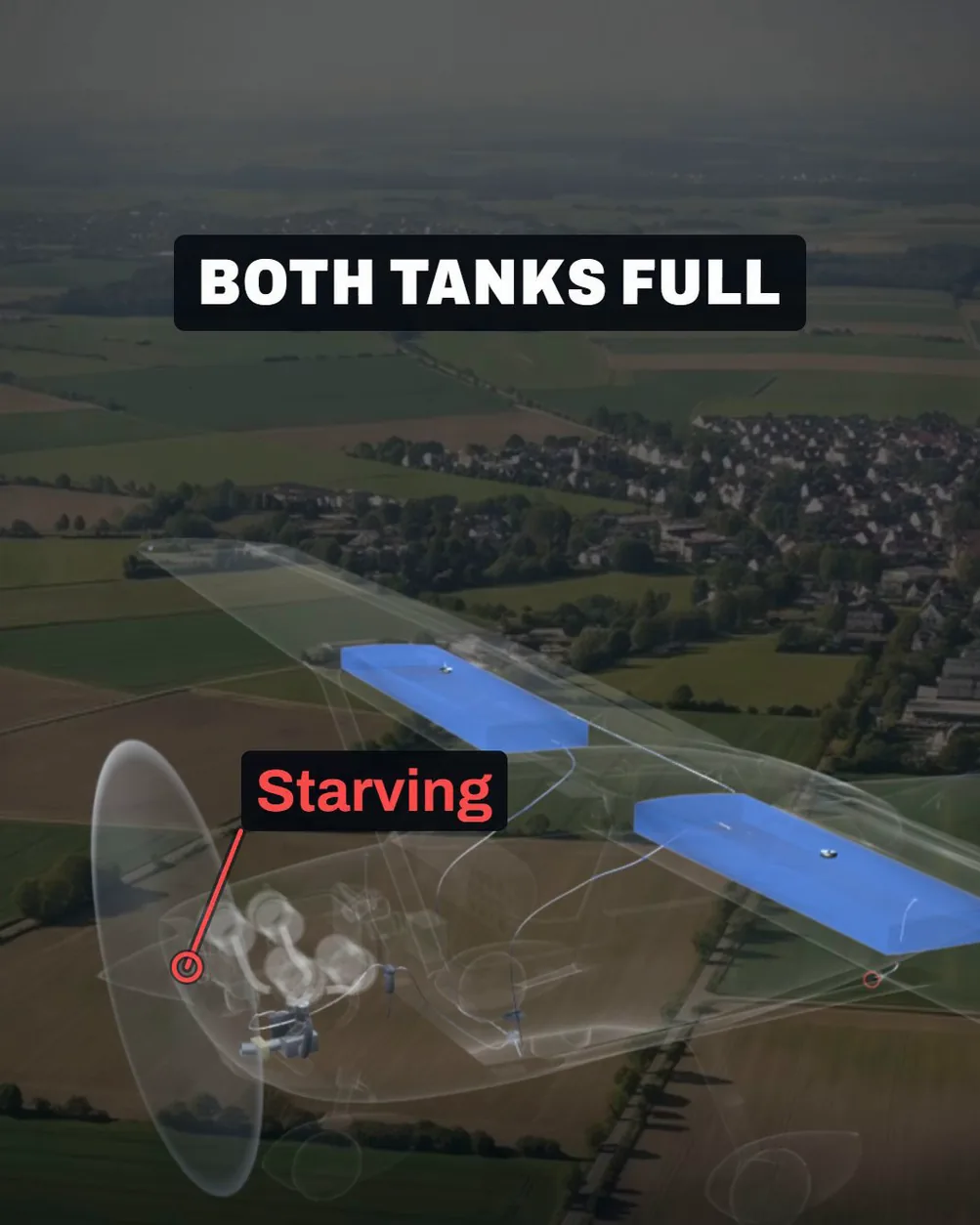
Fuel can only leave a tank as fast as air gets in to take its place. So in a 172 with both tanks full, a blocked vent can still starve the engine. A slip on a low tank, or water in the fuel, can do the same.
Check the fuel vent tube under the left wing on every walkaround, and take off and land with the fuel selector on BOTH. Before the day's first flight and after refueling, drain each tank's sump, its lowest point, and the strainer, a filter by the engine.
How the tanks breathe
In the carbureted 172P, gravity does the work, with no fuel pump. Other 172 models differ, so check your own airplane's handbook. Fuel runs from an aluminum tank in each wing down to the carburetor, which mixes it with air for the cylinders. On the way it passes the selector valve, which you set to LEFT, RIGHT, BOTH or OFF, then the strainer.
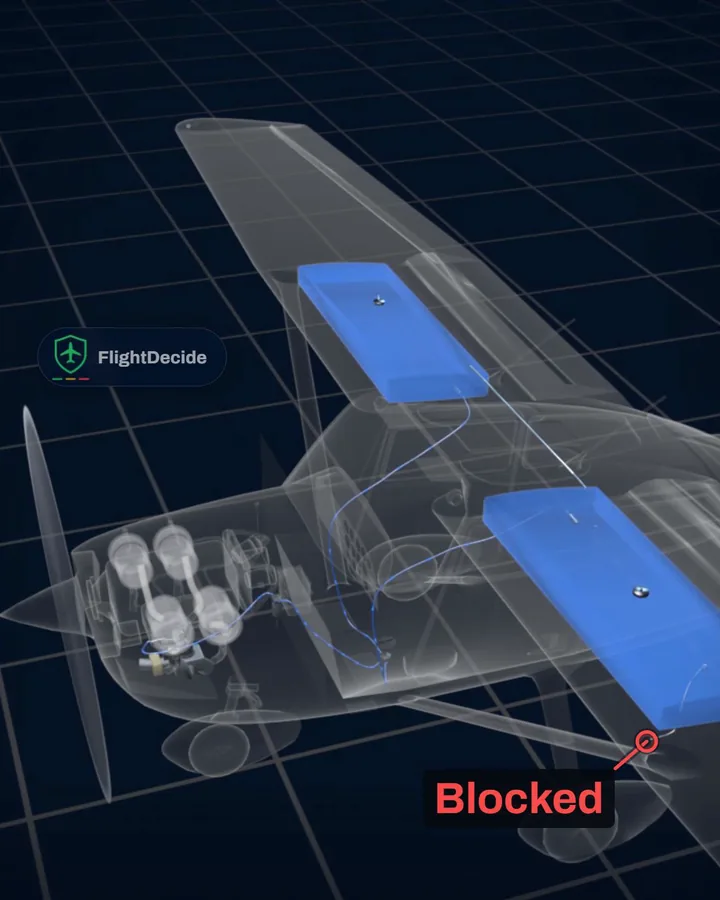
As fuel leaves a tank, air has to come in behind it. If it can't, the pressure above the fuel drops, and that low pressure holds the fuel back against gravity. The tanks breathe through a vent tube under the left wing, near the strut that braces it.
A crossover line links the two tanks' air spaces, so the right tank breathes through the same tube. The right filler cap has a small safety vent too, but the tube is the main air inlet.
Block the vent tube and the flow can fade. The engine loses power and can stop from fuel starvation, with both tanks still full.
Why you take off and land on BOTH
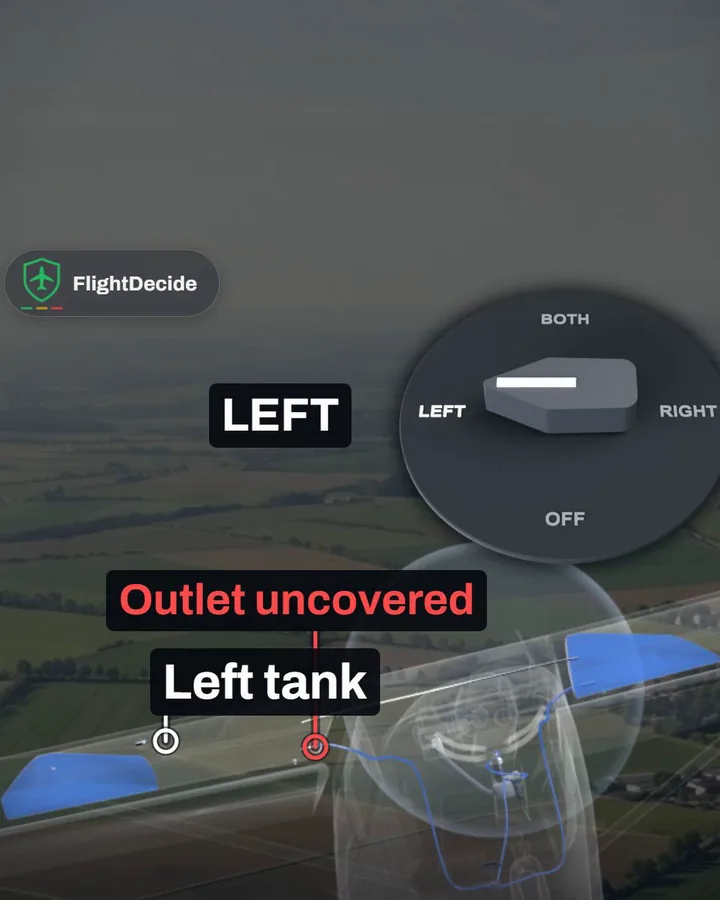
The selector valve sits under the floor. Inside, a rotor, a disc the handle turns, lines up its drilled passages for each setting.
Each tank feeds from a screened outlet at its inboard end, the end nearest the cabin. A slip or skid is flight with the ball in the turn coordinator off center, and the fuel shifts the same way the ball does. At a quarter tank or less, a long one can slide one tank's fuel toward its tip, away from its outlet.
Both outlets sit near the cabin, so the same shift pushes the other tank's fuel onto its outlet. On BOTH, that tank keeps feeding, one reason you take off and land there. On LEFT or RIGHT with that tank at a quarter or less, keep any slip or skid to 30 seconds or less. The same limit applies whenever either tank is dry, even on BOTH.
Where water hides, and how you drain it
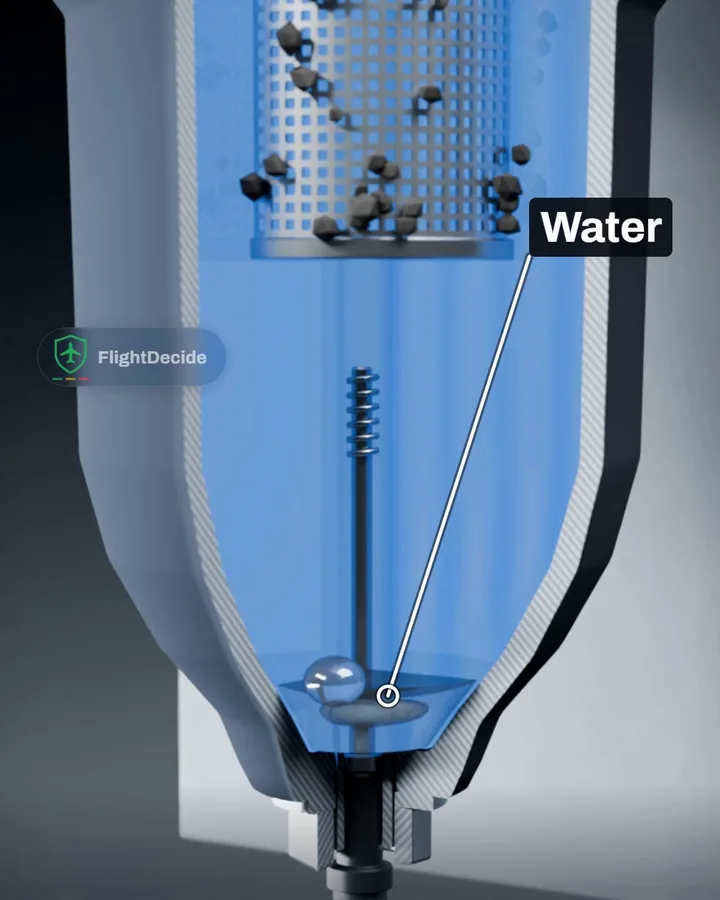
From the selector, fuel passes the strainer on the firewall, the metal wall between the engine and the cabin. Its screen catches dirt. Water is heavier than fuel, so it sinks to the bottom of the strainer's bowl.
Water that reaches the carburetor can stop the engine. Water from condensation also settles in each tank's sump.
Drain each sump into the sampler cup. Look for the right color for the grade, 100LL blue or 100 green, with no water and no dirt. Water can show as clear beads or a clear layer at the bottom of the cup, or as cloudy fuel. Then pull the strainer drain for about four seconds, and check that it's closed.
Three fuel mistakes to avoid
Look at the vent tube's opening under the left wing on every walkaround.
Take off and land on BOTH, not on LEFT or RIGHT. If you ran on one tank in cruise, set BOTH again before you land.
Keep draining while the cup shows water. More can sit behind the first sample, so drain the strainer, the sumps and the selector valve's drain until it's gone.

Check yourself
1. Why can a 172 with both tanks full still lose power from fuel starvation?
2. What makes BOTH the right setting for takeoff and landing?
3. With the selector on LEFT and that tank a quarter full, how long may a slip or skid last?
4. What do you do when the first sample from a sump shows water?
Answers
1. A blocked vent stops air from replacing the fuel, so the flow fades and the engine can stop.
2. A long slip with a low tank can uncover its outlet, and on BOTH the other tank keeps feeding.
3. 30 seconds at most.
4. Keep draining until no water shows, since more may be in the tank.
Where to read more
Everything above rests on these sources.
- Cessna 172P Pilot's Operating Handbookthe aircraft's own handbook
- Cessna 172 Service Manual 1977-1986 Section 12 fuel system
- Pilot's Handbook of Aeronautical Knowledge (FAA-H-8083-25), Chapter 7
Keep reading
- ExplainerHow fuel reaches the engine in a high-wing trainer
- ExplainerThe fuel you cannot use
- ExplainerHow a carburetor works

Score the next flight before you go
FlightDecide reads the weather, the NOTAMs, your fuel and your weight and balance for the planned window, then scores them into a go / no-go call you can check against the raw data.
Get FlightDecide on the App StoreEducational content for pilots. It is advisory only and not a substitute for an official weather briefing, your POH, or your own judgment as pilot in command (14 CFR 91.3). The sources this explainer rests on are listed above.
Picture credits: 3D model: “Cessna172” by KOG_THORNS (sketchfab.com), CC BY 4.0, modified.