Home › Explainers › How ice closes the coffin corner
The short version
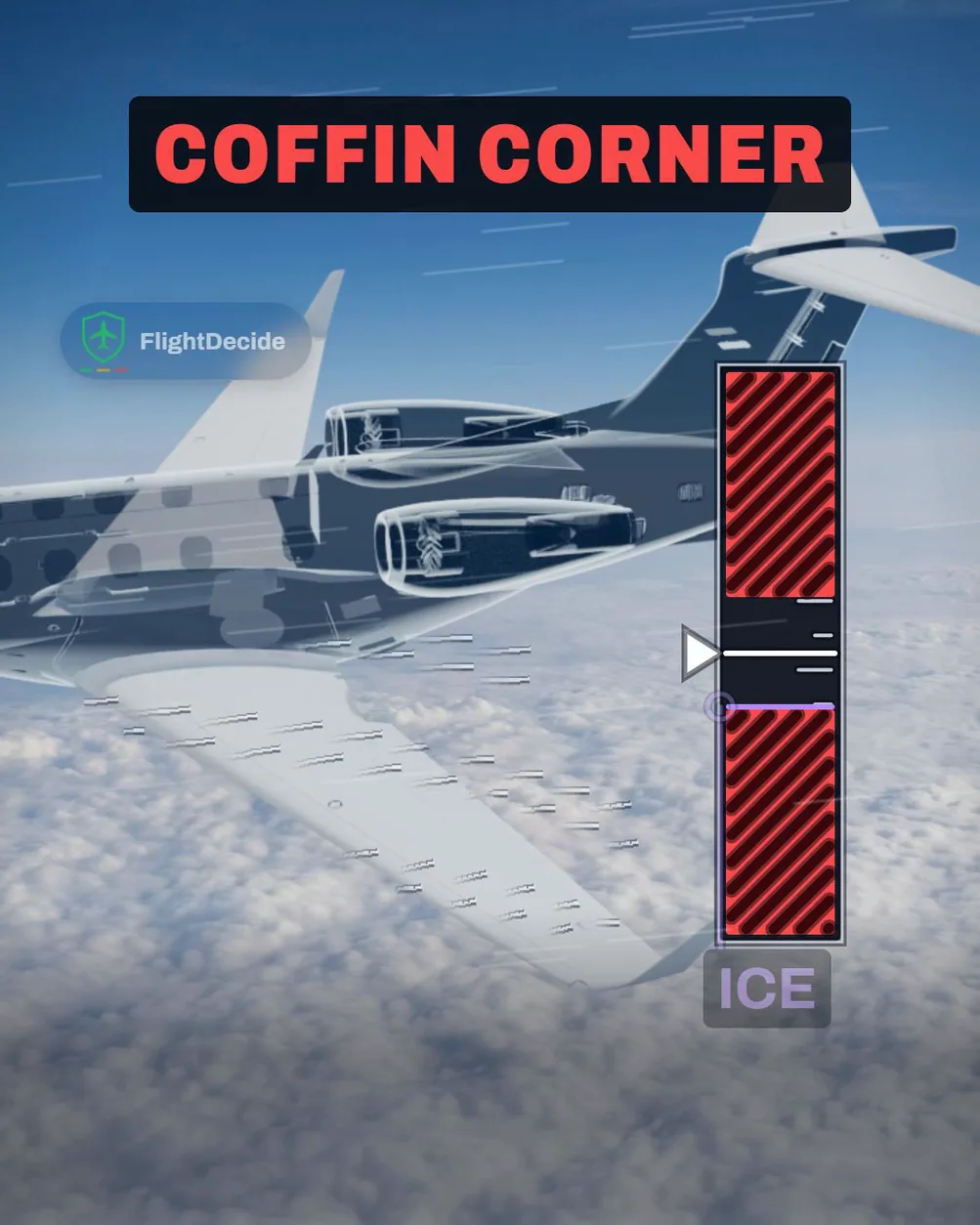
Climb a jet high enough and its speed limits close in. A few knots slower and the wing shakes, or buffets, on its way to a stall. A few knots faster and shock waves cause high-speed Mach buffet.
That narrow speed window is the coffin corner. Ice raises the slow edge, so the window shuts at a lower altitude and with less warning.
Why speed works differently up high
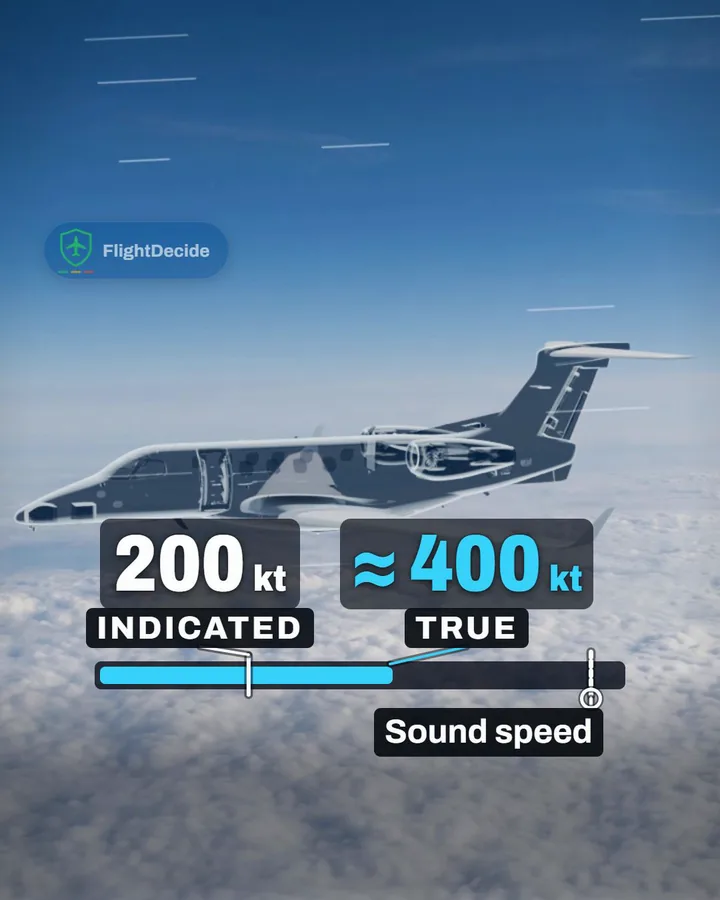
Thin air pushes less on the airspeed indicator. So your indicated airspeed, the dial's reading, sits far below your true airspeed, your speed through the air. At 41,000 feet on a standard day, 200 knots indicated is almost 400 knots true.
The fast edge depends on how close you are to the speed of sound. So up high your limit is a Mach number, your true airspeed as a fraction of the speed of sound.
Hold a constant Mach number in a climb, and the fast edge falls to a lower indicated airspeed.
| Altitude | Temperature | Speed of sound |
|---|---|---|
| Sea level | 15 °C | 661 knots |
| 40,000 feet | -55 °C | 574 knots |
The fast edge, high-speed Mach buffet
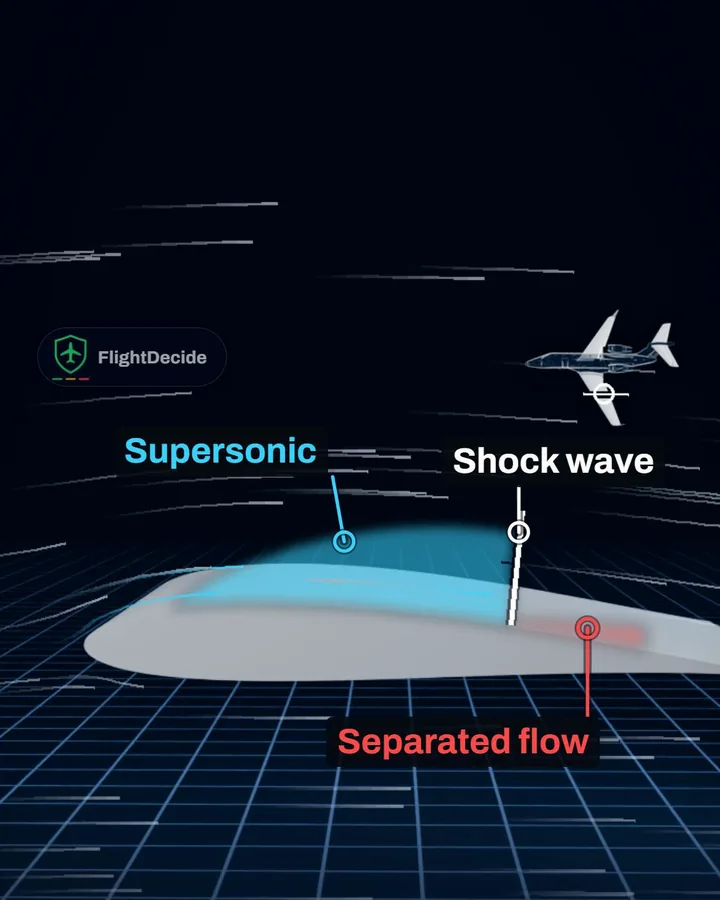
The air flowing over the top of the wing moves faster than the airplane. Speed up, and that air reaches the speed of sound first. The airplane's Mach number at that moment is its critical Mach number.
Past it, a shock wave forms on the upper surface, a thin line where the air suddenly slows. As the shock grows, the airflow behind it breaks away and the wing shakes.
The slow edge, and where they meet
Slow down, and the wing needs a higher angle of attack, the angle between the wing and the oncoming air, to keep its lift. The air then has a sharper turn to make over the top, so it speeds up more.
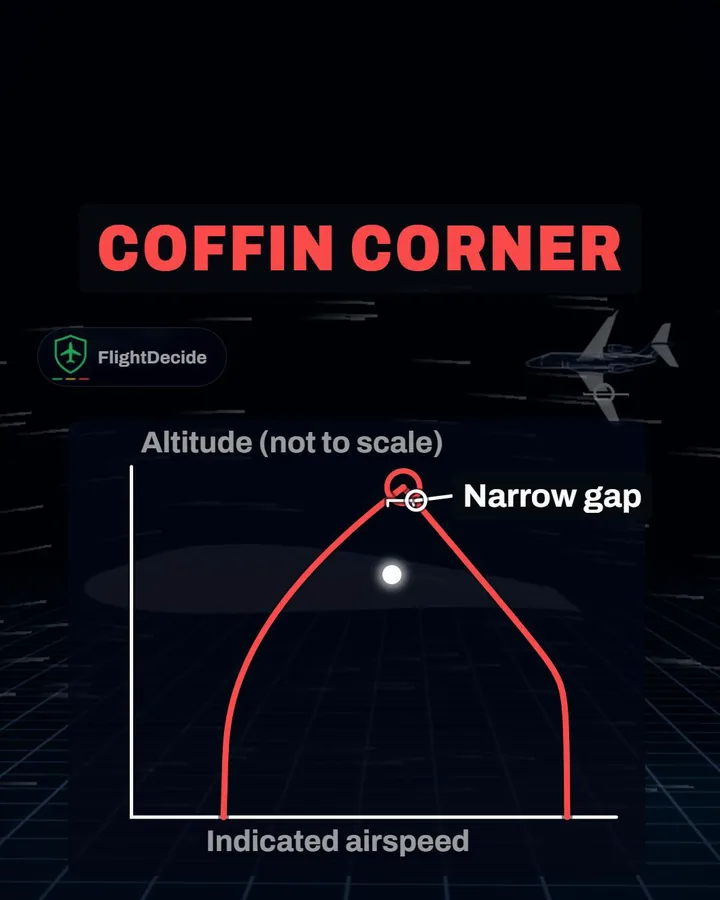
Lower down, a wing stalls at about the same indicated airspeed at any height. Up high, true airspeed stays high even at a slow indicated airspeed, so that air can pass Mach 1. The wing then buffets before it stalls, at a higher indicated airspeed the higher you climb.
Climb on and the edges close in until a few knots separate them, the coffin corner.
The aerodynamic ceiling, where the edges meet, comes lower as weight rises. A bank or a bump of turbulence loads the wing and narrows the gap. So cruise where your flight manual's buffet data for your weight leaves room to maneuver.
What ice does to the window
A jet picks up most of its ice climbing or descending through cloud between 0 °C and -20 °C. At cruise altitude it is far below freezing, so that ice stays on.
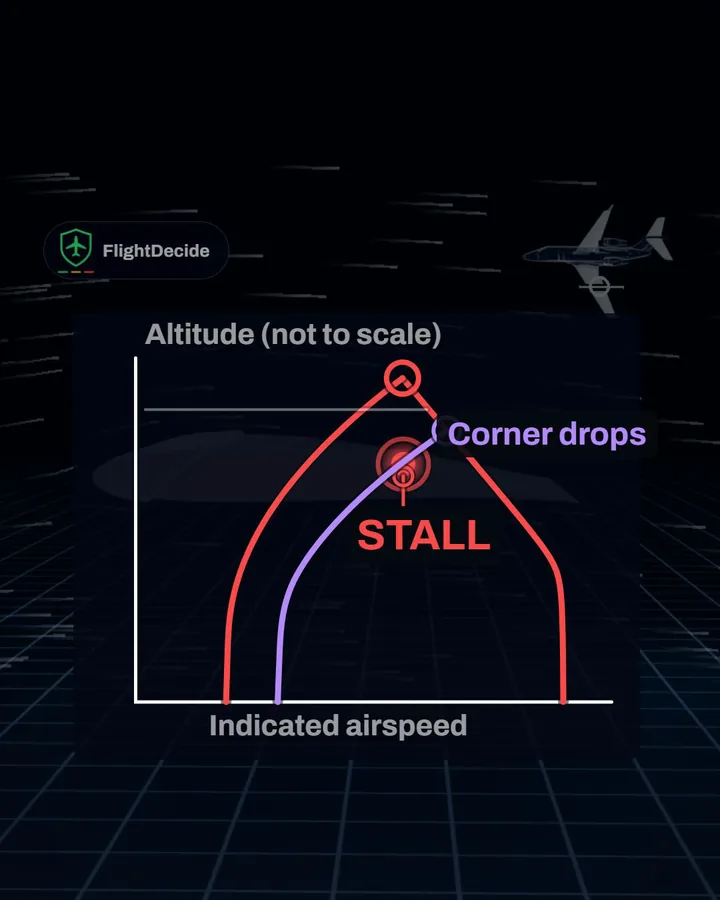
Even a thin layer as rough as coarse sandpaper can cut the wing's maximum lift by as much as 30 percent. Lift grows with the square of airspeed, so the stall speed can rise by about 20 percent.
The slow edge jumps at every altitude, and the corner moves lower. An iced wing can also stall at a lower angle of attack, before a stall warning set for a clean wing sounds.
Thin, rough ice can add up to 40 percent more drag, and engines make far less thrust in thin air. Hold altitude once drag passes the thrust, even on the autopilot, and the speed bleeds away. In many icing events, cruise turned to stall in under 3 minutes.
Four mistakes near the coffin corner
Turn on anti-ice, which keeps ice from forming, before you enter icing. De-ice systems, which remove ice that has formed, are normally used at the first sign of ice.
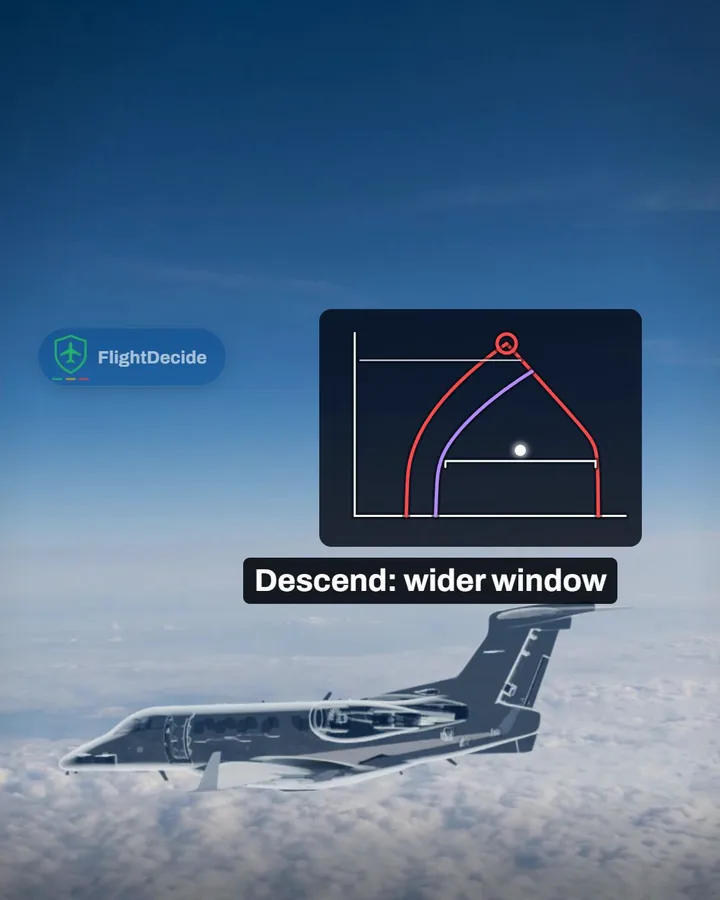
Ask air traffic control for a lower altitude while ice is still on the wing, since the clean-wing margins no longer apply. Lower down, keep the extra speed margin your jet's ice speeds call for. If the speed keeps decaying at maximum continuous thrust, the most thrust allowed with no time limit, descend at once. Then tell ATC, declaring an emergency rather than waiting for a clearance.
Treat any buffet or shudder in icing conditions as a stall about to happen. Outside icing, the trend is a clue to the edge. Speed decaying into a buffet points to the slow edge, and Mach rising into it points to the fast edge.
If the wing stalls or is about to, disconnect the autopilot and autothrottle, the automatic throttle, while holding the attitude. Then lower the nose until the warning and buffet stop and the speed builds. Roll the wings level, set thrust as needed and retract any speed brakes. Return gently to level flight, below the Mach limit. Expect to lose several thousand feet.
Check yourself
1. At 41,000 feet with 200 knots on the airspeed indicator, roughly how fast are you moving through the air?
2. Near the coffin corner, which edge are you at when a buffet comes as the airspeed trends down?
3. Why does ice picked up in cloud at -10 °C still matter once you reach cruise?
4. High up, with the airspeed still decaying at maximum continuous thrust, what do you do?
Answers
1. Almost 400 knots, about twice what the dial shows.
2. The slow edge, so recover as from a stall about to happen, then descend gently, below the Mach limit.
3. It won't melt off up there, so the stall speed stays high.
4. With the speed still decaying, descend at once and tell ATC, declaring an emergency rather than waiting for a clearance.
Where to read more
Everything above rests on these sources.
- Pilot's Handbook of Aeronautical Knowledge (FAA-H-8083-25), Chapter 5
- Airplane Flying Handbook (FAA-H-8083-3), Chapter 16Chapter 16 as a PDF · the whole handbook
- Aviation Weather Handbook (FAA-H-8083-28), Chapters 19 and 20
- AC 61-107
- AC 91-74
- AC 120-109
Keep reading
- ExplainerHow full flaps can stall an iced tail
- ExplainerFreezing level inside a cloud layer
- ExplainerThe stall that turns into a spin

Score the next flight before you go
FlightDecide reads the weather, the NOTAMs, your fuel and your weight and balance for the planned window, then scores them into a go / no-go call you can check against the raw data.
Get FlightDecide on the App StoreEducational content for pilots. It is advisory only and not a substitute for an official weather briefing, your POH, or your own judgment as pilot in command (14 CFR 91.3). The sources this explainer rests on are listed above.
Picture credits: 3D model: “Embraer_ Phenom_300E_AR_v006” by ryan_cd (sketchfab.com), CC BY 4.0, modified.