Home › Explainers › When the controller goes silent but your radios work
The short version
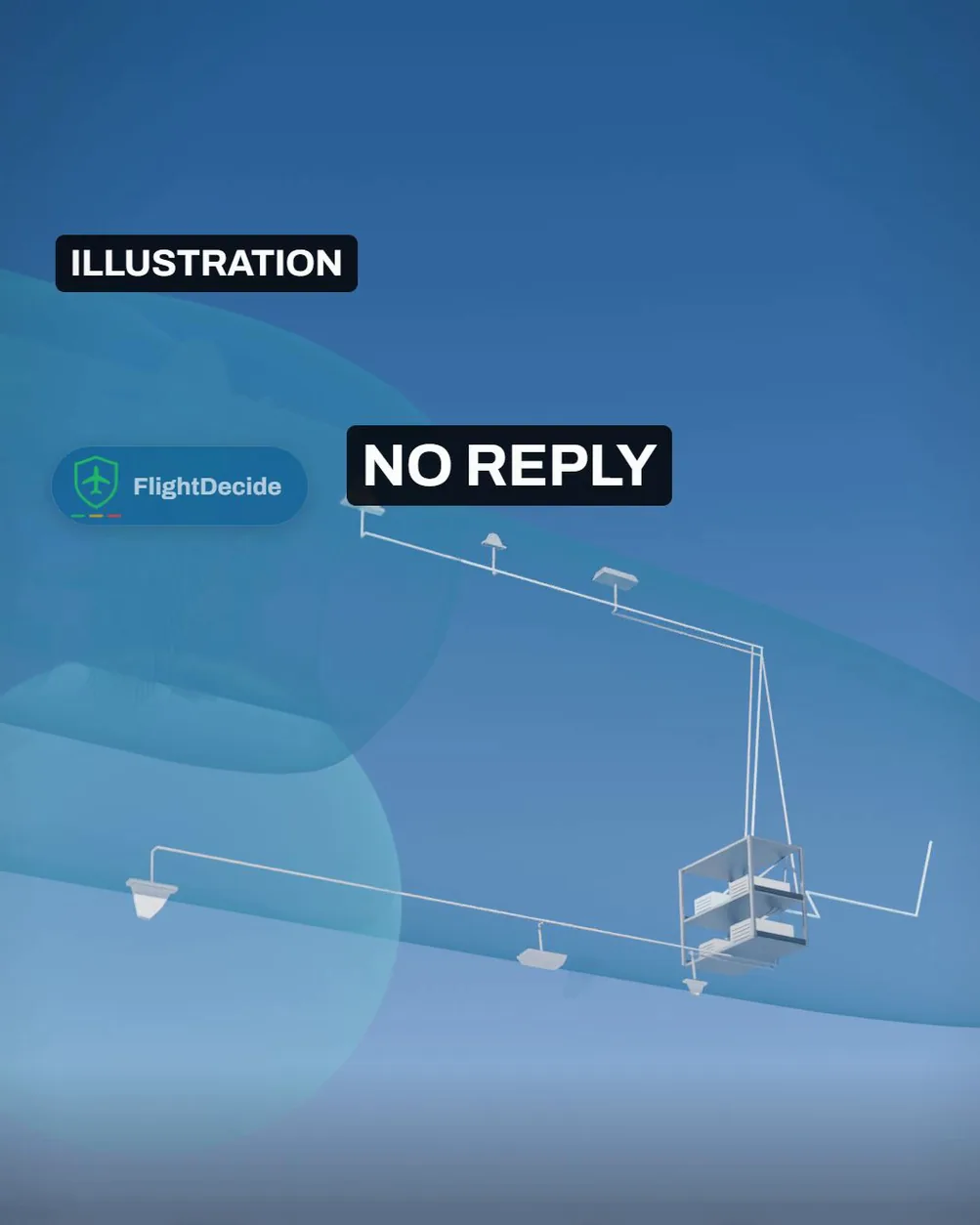
A controller's voice reaches you over the Federal Aviation Administration's (FAA's) ground network and a radio site near your airplane. So a fault on the ground can silence the frequency while the radios on board work.
If nobody answers, check the frequency and volume and call again, trying the last frequency that worked and 121.5, the emergency frequency. If contact stays lost, squawk 7600 and fly the lost communications rules.
How a controller's voice reaches you
An Air Route Traffic Control Center, or Center, handles traffic between airport areas. The controller's voice goes through the Center's voice switch, which connects each controller to the radio lines. Then the FAA's telecommunications network carries it to a remote radio site near your airspace.
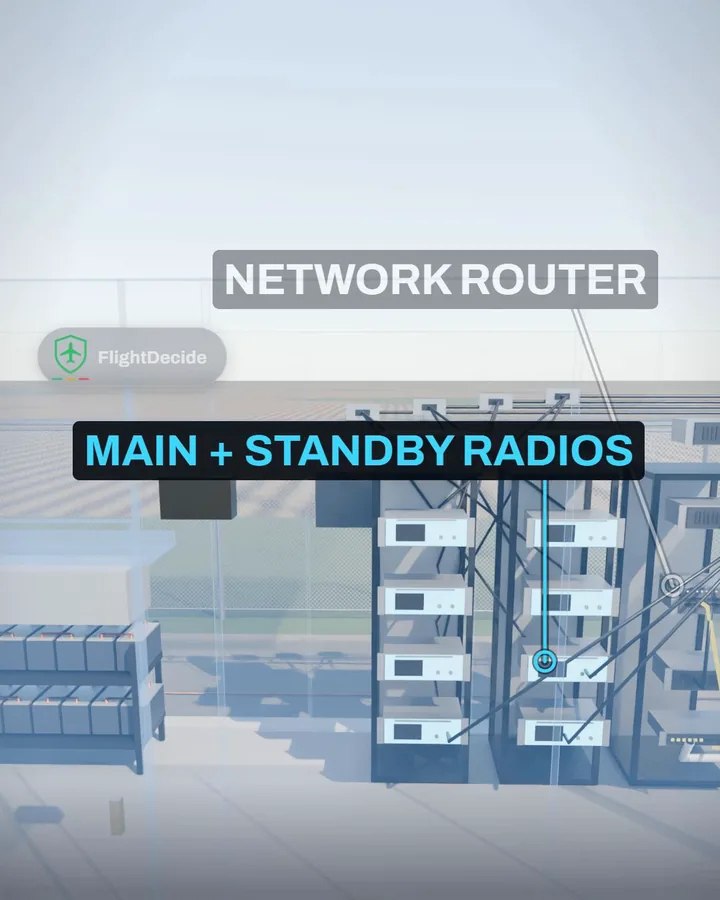
That site holds network equipment, main and standby radios and backup batteries. It transmits on very high frequency (VHF) radio, which travels in straight lines, so terrain and the horizon can block it. Your antenna feeds the radio on board. Standby radios and batteries cover a failed radio or a power cut, not a broken network link.
On November 13, 2026, that ground link became unstable in many places at once. Officials say it began during copper-to-fiber line work, when data from new equipment flooded the FAA's network.
Voice and radar came and went at 17 of 22 Centers, though some frequencies kept working. The FAA stopped departures nationwide with a ground stop. About 3,500 aircraft were airborne, and all landed safely. Traffic resumed a little over four hours later.
What to do when nobody answers
A quiet frequency is normal, so silence alone is not a failure. If your calls go unanswered, try the last frequency that worked, 121.5 and a flight service station, all at once if you can.
Still nothing means a two-way radio communications failure, whatever the cause. Squawk 7600, which sets your transponder to the lost communications code. Air traffic control (ATC) sees it only where its radar or ADS-B still reaches the controller.
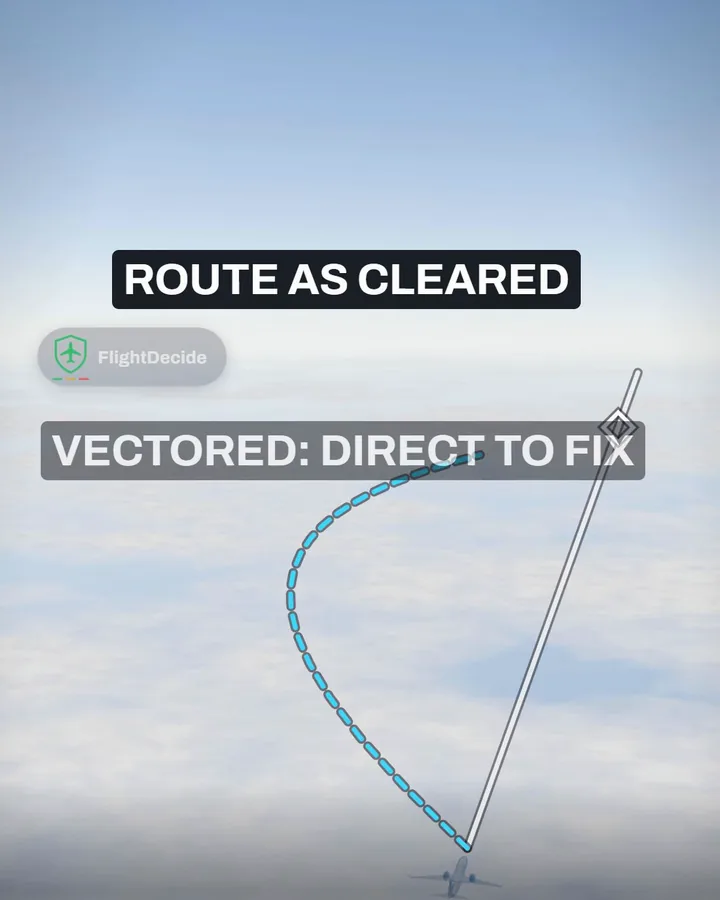
On an instrument flight, if you are in VFR conditions or reach them, continue under visual flight rules and land as soon as practicable. Otherwise, fly the route ATC assigned. If you were being vectored, steered by ATC headings, go direct from there to the fix, route or airway named in that vector clearance. With no assigned route, fly the route ATC said to expect, and with neither, the route you filed.
On each leg, fly the highest of the altitude last assigned, the minimum instrument altitude and any altitude ATC told you to expect. A higher expected altitude starts at the time or fix ATC gave with it, and doesn't apply if contact fails after that.
What TCAS can and cannot do
Flying the rules predictably lets ATC protect your route.
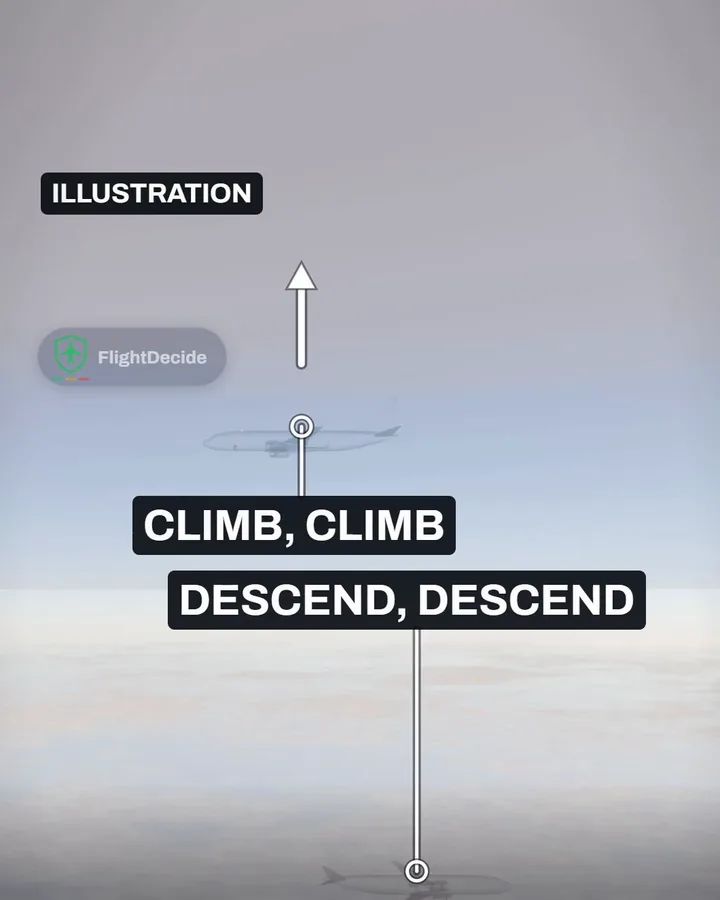
TCAS II, the Traffic Alert and Collision Avoidance System on airliners, asks other aircraft's transponders directly, so it works without the ground. A traffic advisory warns of nearby traffic, and if needed a resolution advisory gives a command such as climb or descend.
When two TCAS II jets meet, their units coordinate so their advisories work together. TCAS can't see an aircraft without a working transponder.
Three mistakes when the radio goes quiet
Call again before deciding your radio has failed. First check the volume and the frequency you dialed.
Land as soon as practicable, not as soon as possible, after losing radio contact on an instrument flight in VFR conditions. The rule asks for a sensible landing, not a rushed one.
Follow a TCAS resolution advisory over an ATC instruction unless that would be unsafe, then tell ATC as soon as you can. Follow it promptly, whether or not the other aircraft has TCAS.
Check yourself
1. Why could your frequency go silent when the radios on board work?
2. Assigned 6,000 feet, with a minimum instrument altitude of 7,000 feet and no expected altitude, what do you fly after losing contact?
3. On an instrument flight in VFR conditions with no radio contact, how soon should you land?
4. If a TCAS resolution advisory conflicts with an ATC altitude instruction, which do you follow?
Answers
1. The break can be on the ground, in the network or the radio site between the controller and you.
2. In cloud on that leg, 7,000 feet, the highest of the altitudes that apply.
3. As soon as practicable, continuing under VFR.
4. The resolution advisory, then tell ATC as soon as you can.
Where to read more
Everything above rests on these sources.
- 14 CFR 91.185the regulation itself, on eCFR
- 14 CFR 91.123the regulation itself, on eCFR
- Aeronautical Information Manual, paragraphs 6-4-1 to 6-4-3
- FAA, Nationwide Ground Stop: Questions and Answers (November 15, 2026)
- FAA, Introduction to TCAS II Version 7.1
Keep reading
- ExplainerWhen the radio goes quiet: light gun signals
- ExplainerWhat flight following does not do
- ExplainerWake turbulence, explained

Score the next flight before you go
FlightDecide reads the weather, the NOTAMs, your fuel and your weight and balance for the planned window, then scores them into a go / no-go call you can check against the raw data.
Get FlightDecide on the App StoreEducational content for pilots. It is advisory only and not a substitute for an official weather briefing, your POH, or your own judgment as pilot in command (14 CFR 91.3). The sources this explainer rests on are listed above.
Picture credits: 3D model: “Boeing 737 MAX 8” by Dlourine (sketchfab.com), CC BY 4.0, modified.